Whimsy Curl: A Practical Guide to Using Playful Decorative Fonts Effectively
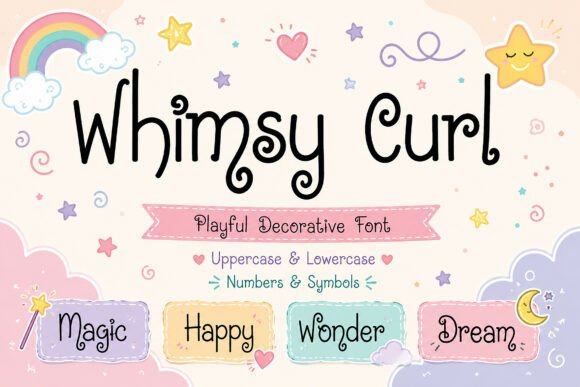
When a design project requires an immediate injection of joy and personality, Whimsy Curl often emerges as a top contender. This delightful decorative typeface is engineered to evoke nostalgia, creativity, and imagination through its charming curly details and handcrafted letterforms. However, the very qualities that make this font so appealing—its intricate swirls and expressive shapes—are also what can lead to significant usability issues if applied without strategic forethought. For designers, marketers, and small business owners targeting audiences ranging from young families to creative hobbyists, understanding how to leverage Whimsy Curl correctly is the difference between a professional, inviting design and one that feels cluttered or amateurish.
Understanding the Role of Whimsy Curl in Modern Design
Whimsy Curl is not a workhorse typeface; it is a specialist. It belongs to the category of display fonts, meaning it is designed specifically for headlines, logos, short phrases, and decorative elements rather than extended reading. Its value lies in its ability to communicate tone instantly. When a viewer sees these playful letterforms, they immediately associate the content with friendliness, childhood wonder, or artisanal care. This makes it exceptionally effective for birthday invitations, toy packaging, boutique branding, and educational materials.
The common misunderstanding arises when creators attempt to force this decorative style into roles it was never meant to fill. Because the font feels warm and approachable, there is a temptation to use it for everything to maintain that "friendly" vibe. Unfortunately, this dilutes the impact of the design and creates functional barriers for the audience. Recognizing Whimsy Curl as an accent rather than a foundation is the first step toward successful implementation.
Avoiding Legibility Traps in Playful Typography
The most frequent mistake encountered with highly stylized fonts like Whimsy Curl is sacrificing readability for aesthetics. The elaborate curls and varying baseline shifts that give the font its character can also cause letters to visually collide, especially at smaller sizes. When text becomes difficult to decipher, the message is lost, regardless of how beautiful the lettering appears.
To prevent this, adhere to strict sizing guidelines. Whimsy Curl should generally be reserved for large-format applications where the negative space between characters remains distinct. If you are designing a product label or a social media graphic, test the font at the actual printed or viewed size before finalizing. What looks spacious on a 27-inch monitor may become an illegible tangle of lines on a 3-inch jar label or a mobile screen. If the details blur together, the font is too small for that specific application, no matter how much you like the style.
The Danger of All-Caps Settings
Another critical error involves capitalization. Many decorative scripts and curl-based fonts are drawn with specific connections and flow that assume mixed-case usage. Setting Whimsy Curl in all capital letters often breaks the natural rhythm of the letterforms, resulting in awkward spacing and a loss of the intended handcrafted feel. Furthermore, all-caps decorative text is significantly harder to read because the unique word shapes that aid rapid recognition are eliminated.
Better Approach: Stick to title case or sentence case to preserve the font’s organic movement. If your design concept absolutely demands uppercase emphasis, consider using a complementary sans-serif font for the capitalized words and reserving Whimsy Curl for the key emotional keywords in mixed case. This contrast not only improves legibility but also highlights the decorative font more effectively by giving it room to breathe.
Strategic Pairing and Visual Hierarchy
A standalone decorative font rarely completes a design. A common pitfall is pairing Whimsy Curl with another ornate or highly textured typeface. When two fonts compete for attention, the result is visual noise that confuses the viewer and diminishes the perceived quality of the brand. This is particularly damaging in commercial contexts like packaging or advertising, where clarity drives conversion.
Successful typography relies on contrast. Whimsy Curl pairs best with clean, simple, and neutral typefaces. A geometric sans-serif or a classic serif provides a stable backdrop that allows the curls to pop without overwhelming the layout. Think of the supporting font as the canvas and Whimsy Curl as the paint; the canvas should enhance the art, not compete with it.
- For Invitations: Pair Whimsy Curl for names and headers with a light-weight sans-serif for logistical details like dates, times, and addresses.
- For Packaging: Use the decorative font for the product name and a highly legible, compliant-friendly font for ingredients and warnings.
- For Web Design: Limit Whimsy Curl to hero banners or call-to-action buttons, ensuring body copy remains in a web-safe, accessible typeface.
Evaluating Technical Quality Before Purchase
Before integrating Whimsy Curl into a paid project or purchasing a license, it is essential to evaluate the technical construction of the file. Not all versions of decorative fonts are created equal. Poorly digitized versions may lack proper kerning pairs, leading to uneven spacing that requires tedious manual adjustment. Others may have incomplete character sets, missing essential punctuation, numbers, or multilingual support.
Always preview the full character map before buying. Check specifically for:
- Alternates and Ligatures: High-quality decorative fonts often include alternate glyphs for problematic letter combinations. These are crucial for maintaining flow in custom logos.
- Punctuation Alignment: Ensure periods, commas, and exclamation points sit correctly relative to the unique baseline of the font.
- Licensing Clarity: Verify that the license covers your intended use. A personal license does not cover commercial merchandise, client work, or embedded web fonts. Misunderstanding this can lead to legal complications and unexpected costs later.
Contextual Appropriateness and Audience Perception
While Whimsy Curl is inherently cheerful, context dictates its effectiveness. A mistake many beginners make is assuming "playful" equals "appropriate for all youth-oriented projects." There is a distinction between whimsical and juvenile. For early childhood education or toy brands, the font is perfect. However, for teen-focused products, sophisticated parenting blogs, or premium organic baby care, an overly cutesy application might signal "cheap" rather than "quality."
Consider the maturity level of your target demographic. If you are aiming for a nostalgic, vintage, or artisanal aesthetic, Whimsy Curl works beautifully when balanced with minimalist photography and muted color palettes. If the surrounding design elements are equally loud and colorful, the font contributes to sensory overload. Restraint is a professional skill; sometimes, using less of a decorative element communicates more confidence and sophistication than saturating the design with it.
Making Informed Decisions for Lasting Results
Ultimately, Whimsy Curl is a powerful tool for adding warmth and distinction to creative projects. Its handcrafted feel resonates deeply in an increasingly digital world, offering a human touch that standard system fonts cannot replicate. By avoiding common pitfalls regarding legibility, pairing, and technical quality, you ensure that the font serves your communication goals rather than hindering them.
Treat this typeface as a deliberate design choice rather than a default setting. Test it rigorously in context, respect its limitations, and pair it thoughtfully. When used with intention and care, Whimsy Curl transforms ordinary layouts into memorable experiences that connect emotionally with viewers while maintaining the professional standards necessary for successful branding and communication.