American Vibe: Using This Patriotic Display Font Effectively
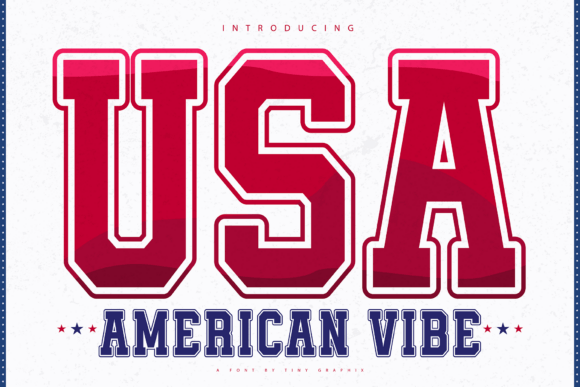
When a project demands immediate visual impact and a distinct sense of national pride, American Vibe often emerges as a top contender. This bold, commanding display font captures a specific intersection of Americana aesthetics, merging the structured authority of collegiate athletics with the celebratory energy of patriotic holidays. It is a typeface designed to be loud, confident, and unmistakably American. However, having a powerful tool does not guarantee a successful design. Many creators, from small business owners making t-shirts to professional marketers designing Independence Day campaigns, underestimate the technical and stylistic constraints of such a specialized typeface.
The appeal of American Vibe lies in its versatility within a niche. It works exceptionally well for 4th of July promotions, vintage-style USA apparel, sports team branding, and heritage-focused packaging. Yet, because it carries so much visual weight, it requires a disciplined approach. Treating this font like a standard sans-serif or serif family is the fastest route to amateurish results. To get the most out of this typeface, you must understand where it shines and, more importantly, where it fails.
The Trap of Overusing Display Typography
The most frequent mistake designers make with American Vibe is ignoring its classification as a display font. Display typefaces are engineered for headlines, logos, and short bursts of text at large sizes. They prioritize character and style over extended readability. A common error occurs when creators attempt to use this font for subheadings, captions, or body copy to maintain thematic consistency throughout a layout.
When scaled down below 24 points, the intricate details and heavy strokes of American Vibe begin to collapse. The negative space shrinks, letters bleed into one another, and legibility plummets. This forces the viewer to squint or simply skip the text entirely, defeating the purpose of communication. Instead of forcing thematic unity through font repetition, achieve cohesion through color palettes, texture, or complementary secondary typefaces. Pair American Vibe with a clean, neutral sans-serif like Helvetica, Montserrat, or Open Sans for supporting text. This contrast actually enhances the patriotic font by giving it room to breathe and perform its intended role as a focal point.
Misjudging Spacing and Kerning Requirements
Bold, athletic-inspired fonts often come with default metrics that do not suit every application. Relying solely on the software’s automatic kerning is a missed opportunity that can make professional designs look unpolished. American Vibe features strong vertical stems and decorative elements that can create awkward gaps or unintended collisions depending on the letter combination.
For example, pairing an "A" next to a "V" or a "T" next to an "O" may result in uneven visual rhythm if left untouched. In headline work, these micro-adjustments are what separate custom typography from generic templates. Take the time to manually adjust tracking and kerning. Tighter tracking often enhances the solid, blocky feel associated with varsity and patriotic styles, while looser tracking can evoke a more retro, mid-century advertisement aesthetic. Always test your spacing at the final output size; what looks balanced on a 27-inch monitor may appear cramped on a mobile screen or distorted on a printed banner.
Contextual Alignment and Audience Expectations
American Vibe carries inherent cultural associations. It reads as festive, traditional, and energetic. A subtle but critical error involves applying this tone-deafly to contexts that require solemnity or modern minimalism. While the font is perfect for a county fair poster or a barbecue sauce label, it may feel jarring or disrespectful on a memorial day tribute or a serious historical documentary cover.
Before committing to this typeface, evaluate the emotional temperature of your project. Does the boldness of the font support the message, or does it compete with it? If your goal is quiet reflection or sleek contemporary tech branding, the rustic strength of American Vibe will likely clash with your objectives. Conversely, if you are designing for a demographic that values tradition and nostalgia, leaning into the font’s collegiate and holiday flair is a strategic advantage. Understanding these nuances prevents wasted effort on revisions and ensures your typography resonates rather than distracts.
Licensing and Commercial Usage Oversight
Enthusiasm for a font’s aesthetic should never bypass due diligence regarding licensing. Many users download American Vibe from free repositories or bundle sites without verifying the specific license terms. Assuming that a free download equals free commercial use is a risky assumption that can lead to legal complications or unexpected costs later.
- Verify the License Type: Check whether the file includes a desktop, webfont, or app license. A personal-use-only license does not cover merchandise sold on Etsy or promotional materials for a business.
- Check Modification Rights: If you plan to alter the letterforms for a logo, ensure the EULA (End User License Agreement) permits derivative works. Some foundries restrict modifications even in paid licenses.
- Source Reliably: Download from reputable marketplaces or the original designer’s site. Third-party aggregators sometimes host outdated files missing essential glyphs or updated kerning tables.
Taking ten minutes to read the license agreement protects your business and supports the type designer. It also ensures you have access to the complete character set, including punctuation, numbers, and special symbols that are often incomplete in unauthorized versions.
Technical Preparation for Print and Digital
The physical rendering of American Vibe varies significantly between screen and print. On digital platforms, heavy fonts can suffer from anti-aliasing issues at medium sizes, appearing blurry or pixelated. In print, ink spread on uncoated paper can fill in the counter spaces of bold letters, making them look muddy. These are not flaws in the font itself but rather failures in technical preparation.
For web projects, test American Vibe across multiple browsers and devices. Consider using CSS font-smoothing properties or serving SVG formats for logos to maintain crisp edges. For print, request a proof on the actual paper stock before running a full batch. You may need to slightly increase tracking or reduce the font weight digitally to compensate for ink gain on porous materials like cardboard or cotton fabric. Anticipating these production variables ensures the final product matches the vision on your screen.
Evaluating Alternatives Before Committing
Sometimes, despite its strengths, American Vibe is simply not the right fit. Recognizing this early saves time. If you find yourself fighting against the font’s personality—trying to make it look softer, more modern, or more legible—it is a signal to pivot. Compare it against similar options like Bebas Neue for a cleaner industrial look, Rye for a western vibe, or Shrikhand for a retro curve. Each alternative solves different problems.
Create quick mockups using two or three candidates before finalizing your choice. Place them in context with real content, not placeholder text. Real words reveal spacing issues and tonal mismatches that lorem ipsum hides. This comparative step transforms font selection from a subjective preference into an informed design decision.
Ultimately, American Vibe is a potent asset for conveying liberty, strength, and celebration. By respecting its limitations as a display typeface, attending to typographic details, verifying legal usage, and preparing for technical output, you elevate your work above generic patriotic clichés. Thoughtful application turns a bold font into a meaningful communication tool that honors both the aesthetic tradition and the audience’s experience.