Melty Pop: Retro Display Font for Modern Design
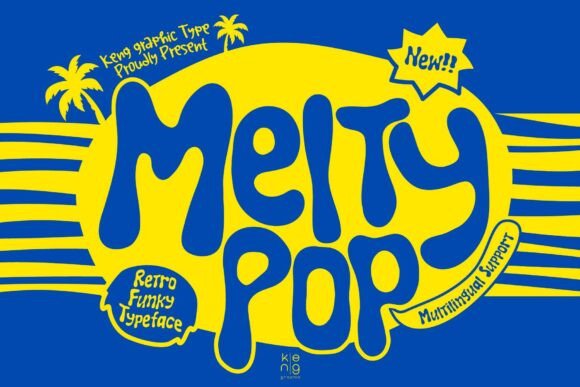
In the current landscape of graphic design, there is a distinct shift away from sterile minimalism toward aesthetics that evoke emotion, nostalgia, and tactile warmth. Melty Pop serves as a direct response to this trend, offering designers a typographic tool that instantly communicates a carefree, 70s-inspired spirit. Unlike standard geometric sans-serifs that prioritize neutrality, this groovy retro display font is engineered to inject personality and softness into visual projects. Its defining characteristic lies in the soft melting curves and playful shapes that mimic the fluidity of vintage signage and psychedelic art, yet it retains enough structural integrity to function effectively in contemporary digital and print media.
For creatives and business owners, selecting a typeface is rarely just about legibility; it is about establishing an immediate emotional baseline. Melty Pop matters because it solves a specific communication challenge: how to convey approachability and fun without sacrificing professional polish. When a brand needs to signal that it is welcoming, nostalgic, or vibrant, traditional bold fonts can sometimes feel too aggressive or corporate. This typeface bridges that gap by utilizing organic forms that feel handcrafted rather than manufactured. The result is a visual identity that feels established and warm, leveraging the psychological comfort associated with 70s aesthetics while remaining relevant for modern audiences aged 20 to 50 who appreciate authentic, vibe-driven design.
Enhancing Brand Identity Through Nostalgic Warmth
The primary practical benefit of integrating Melty Pop into a branding suite is its ability to shortcut emotional connection. In marketing and entrepreneurship, building trust and likability often requires significant time and consistent messaging. However, typography acts as a non-verbal cue that sets expectations before a single word is read. The bold personality of this font carries inherent connotations of summer vibes and optimism. For small business owners in lifestyle sectors—such as boutique retail, artisanal food and beverage, or creative services—this typeface does the heavy lifting of tone-setting.
Consider a local coffee roaster launching a new seasonal blend. Using a rigid, modern serif might communicate quality but fail to capture the sensory experience of a warm, relaxing morning. By utilizing Melty Pop for the product name or packaging headline, the designer aligns the visual form with the desired consumer feeling. The soft melting curves suggest liquid, heat, and comfort, reinforcing the product attributes through typography alone. This alignment improves presentation and strengthens communication, ensuring the visual identity supports the business goal of creating a memorable customer experience rather than just labeling a product.
Practical Applications in Packaging and Apparel
While versatile, Melty Pop excels in environments where capturing attention quickly is paramount. Its structure makes it particularly effective for packaging and apparel, where text must compete with colors, textures, and physical form factors. The bold weight ensures readability at a distance or on curved surfaces, while the playful shapes prevent the design from feeling utilitarian.
- Product Packaging: Ideal for snack foods, beverages, and cosmetics targeting a demographic that values retro charm. The font’s unique ligatures and curves create a custom logotype appearance without the expense of bespoke lettering.
- Apparel and Merchandise: T-shirts, tote bags, and hats rely heavily on typography as the central graphic element. Melty Pop provides sufficient visual interest to stand alone as a design, reducing the need for complex illustrations and simplifying production decisions.
- Event Signage: For festivals, markets, or pop-up shops, the font’s high-contrast forms ensure visibility while maintaining a cohesive, cheerful atmosphere that encourages social sharing.
In these contexts, the font supports efficiency. Designers do not need to manipulate or distort standard letters to achieve a retro look; the aesthetic is baked into the glyph design. This saves time during the ideation phase and reduces the risk of creating illegible or awkward typography when attempting to force a modern font into a vintage mold.
Optimizing Social Media Graphics and Headlines
Digital creators and social media marketers face the constant challenge of stopping the scroll. In feed environments saturated with similar layouts and stock imagery, distinctive typography serves as a pattern interrupt. Melty Pop offers a strategic advantage here by providing a texture that contrasts sharply with the system fonts used by social platforms. When used in headlines, thumbnails, or story overlays, the font’s organic lines draw the eye and signal content that is likely entertaining, educational in a casual way, or aesthetically pleasing.
However, practical application requires restraint. Because Melty Pop has such a strong voice, it functions best as a headline or accent font rather than a body copy solution. For bloggers and educators creating carousel posts or infographic headers, pairing this display font with a clean, neutral sans-serif for explanatory text creates a necessary hierarchy. This combination ensures that the "good vibes" attract the audience, while the supporting text delivers the value clearly. This thoughtful pairing prevents the design from becoming overwhelming and ensures that the retro charm enhances rather than obscures the message. It simplifies decision-making for content creators by providing a clear formula: use Melty Pop for the hook, and a functional typeface for the information.
Navigating Limitations and Contextual Fit
To maintain E-E-A-T principles in design advice, it is crucial to acknowledge where a specific tool may not be the right fit. While Melty Pop is a powerful asset for evoking warmth and fun, its distinct personality means it is not universally applicable. Professionals must evaluate whether the retro aesthetic aligns with their specific industry standards and audience expectations.
There are scenarios where this typeface may introduce friction rather than value. For industries requiring high degrees of authority, precision, or solemnity—such as legal services, financial institutions, or medical technology—the soft melting curves could inadvertently signal a lack of seriousness or stability. In these cases, the "carefree spirit" might be misinterpreted as unprofessionalism. Similarly, for long-form editorial content or dense technical documentation, the decorative nature of the glyphs will reduce reading speed and cause fatigue. Users should compare options and reserve Melty Pop specifically for display purposes, titles, and short-form branding elements.
Furthermore, accessibility must remain a priority. While the font is bold, the unique shapes of certain characters can sometimes reduce instant recognition for users with dyslexia or visual impairments. Responsible designers should test contrast ratios and consider providing alternative text or pairing with highly legible secondary fonts to ensure inclusivity. The goal is to add cheerful retro charm without excluding segments of the audience.
Strengthening Creative Workflows and Outcomes
Beyond individual projects, incorporating specialized display fonts like Melty Pop into a designer’s toolkit supports broader creative goals. For freelancers and agencies, having a go-to solution for retro and nostalgic briefs increases efficiency. Instead of spending hours searching for free alternatives that often lack complete character sets or proper kerning, professionals can rely on a robust, well-crafted typeface that delivers consistent results. This reliability allows more time to be spent on strategy and layout refinement.
Additionally, using a font with such specific cultural resonance helps in storytelling. Design is ultimately about narrative, and Melty Pop tells a story of optimism, leisure, and human touch. For entrepreneurs trying to differentiate themselves in automated, AI-heavy markets, this human-centric typography signals authenticity. It suggests that there are real people behind the brand who care about aesthetics and mood. Whether applied to a logo, a poster, or a digital banner, the font transforms generic layouts into branded experiences. It turns standard communication into an opportunity for connection, making every project feel bright, memorable, and intentionally crafted for an audience that craves genuine interaction.