Bamboo Jungle: Integrating Organic Typography into Tropical Design Workflows
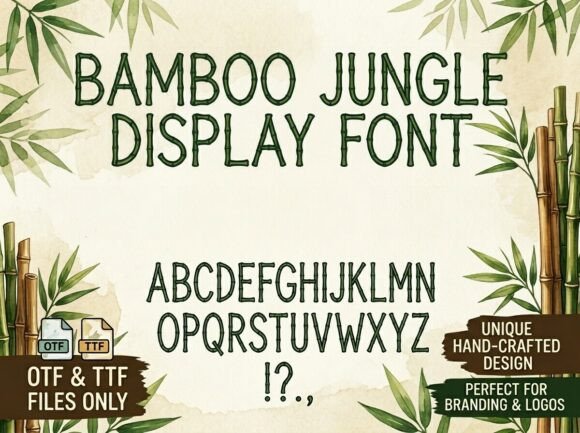
Typography selection is rarely just about aesthetics; it is a strategic decision that defines the user experience and brand perception before a single image is loaded. For designers working within the eco-tourism, hospitality, and botanical sectors, finding a typeface that balances thematic resonance with professional execution is a common workflow bottleneck. Bamboo Jungle addresses this specific niche by offering a hand-crafted display font constructed from realistic bamboo stalks. Unlike generic novelty fonts that often sacrifice legibility for gimmickry, this typeface maintains a slender, upright silhouette that functions effectively in commercial environments. Integrating Bamboo Jungle into your design process requires understanding its role as a specialized asset, managing technical constraints, and pairing it correctly to maintain visual hierarchy.
Defining the Asset’s Role in Brand Identity
Before opening your design software, it is necessary to categorize where Bamboo Jungle fits within the broader brand architecture. This typeface is strictly a display solution. Its intricate details—segmented nodes, organic textures, and natural imperfections—are designed for high-impact visibility at larger sizes. In a practical workflow, this means it should be reserved for primary touchpoints such as logotypes, editorial headers, wayfinding signage, and hero section text.
Attempting to use this font for body copy or functional UI elements will degrade readability and increase cognitive load for the user. Instead, treat Bamboo Jungle as an anchor element. During the mood boarding and concepting phase, test the font against your core brand values. Does the "quiet strength" of the letterforms align with a luxury resort's promise of tranquility? Does the raw texture support an independent tiki bar’s authentic, unpolished vibe? Validating this alignment early prevents costly rebranding efforts later. The font serves as an immediate visual shorthand for "tropical," "organic," and "adventure," allowing you to communicate complex atmospheric concepts without relying heavily on stock photography.
Technical Preparation and File Management
Efficient implementation begins with proper file preparation. Hand-crafted fonts like Bamboo Jungle often contain complex vector paths that can impact performance if not managed correctly. Before integrating the font into a live project, audit the file formats available. Ensure you have OpenType (OTF) or TrueType (TTF) versions installed for desktop applications, and verify if web-font files (WOFF2) are included for digital deployments.
For print projects involving large-format signage or merchandise, inspect the glyph outlines in Illustrator or similar vector software. Because the letterforms mimic natural stalks, some intersections may require manual cleanup or path simplification depending on your output method. Laser cutting or CNC routing, for example, demands clean, continuous paths to prevent machine errors. If you are designing for screen, test the rendering at various resolutions. The organic textures that look beautiful at 72pt may turn to visual noise at 24pt on a mobile device. Establishing minimum size guidelines during the pre-production phase ensures consistency across all deliverables.
Strategic Font Pairing and Visual Hierarchy
Bamboo Jungle cannot work in isolation. A successful tropical design system relies on contrast to make the display font effective. When building your typographic palette, select secondary and tertiary typefaces that provide structural stability. A clean geometric sans-serif or a highly legible humanist serif typically offers the best counterpoint to the organic irregularity of bamboo letterforms.
Consider the following pairing workflow:
- Primary Display: Bamboo Jungle for headlines, logos, and accent text.
- Secondary Headings: A bold, neutral sans-serif to bridge the gap between the decorative display and the body text.
- Body Copy: A high-x-height serif or sans-serif optimized for extended reading.
- Functional Text: A monospaced or utilitarian font for captions, data, and navigation.
This hierarchy ensures that the Bamboo Jungle font acts as a focal point rather than a distraction. In editorial layouts for travel magazines or resort brochures, allow ample negative space around the display type. Crowding the letterforms diminishes their organic elegance. Let the whitespace breathe, mimicking the openness of the rainforest environment the font seeks to evoke.
Application Across Physical and Digital Touchpoints
The versatility of Bamboo Jungle becomes apparent when applied across different media, but each medium requires specific adjustments. For physical signage in botanical gardens or outdoor resorts, durability and legibility are paramount. The segmented nodes of the font translate exceptionally well to carved wood, etched stone, or matte vinyl. However, avoid using this typeface on reflective surfaces or low-contrast backgrounds, as the internal texture can reduce character recognition from a distance.
In digital environments, such as booking engines or travel blogs, performance is key. If using Bamboo Jungle as a web font, subset the character set to include only the glyphs necessary for your content. This reduces file size and improves page load speeds, which is critical for SEO and user retention. For social media assets, the font’s vertical orientation works well with portrait aspect ratios. Use it to create templated quote cards or announcement overlays that maintain brand consistency across Instagram and Pinterest. The distinct aesthetic helps stop the scroll, signaling to the audience that the content is rooted in nature and adventure.
Quality Control and Accessibility Considerations
Creative expression must always be balanced with accessibility standards. While Bamboo Jungle is a stylized display font, it still needs to meet basic usability criteria. When using the font in digital headers, ensure sufficient color contrast against the background. WCAG guidelines apply to decorative text when it conveys essential information. If the header contains critical navigation or instructional content, verify that the texture does not interfere with character distinction for users with visual impairments.
Implement a quality control checklist for every project utilizing this typeface:
- Legibility Test: View the design at 50% zoom or from 10 feet away. Can the message be parsed instantly?
- Context Check: Does the font style match the surrounding imagery and tone? Avoid pairing lush bamboo letterforms with sterile, industrial photography.
- Reproduction Proof: Always request a physical proof for print jobs to verify that fine details hold up in ink or thread.
- Cross-Browser Testing: Verify web font rendering on Chrome, Safari, and Firefox to ensure consistent kerning and texture clarity.
By institutionalizing these checks, you protect the integrity of the design and ensure the client’s investment yields professional results.
Long-Term Maintenance and Brand Evolution
Trends in tropical design shift, but the appeal of natural materials remains relatively constant. Bamboo Jungle is an asset built for longevity, provided it is maintained correctly within your design system. Document the usage rules in your brand guidelines. Specify approved colors, minimum sizes, and prohibited modifications. Prevent team members from stretching, distorting, or applying excessive effects to the font, as this destroys the hand-crafted illusion.
As brands evolve, you may need to refresh the application of the font without replacing it. This could involve shifting from a dark green colorway to a warmer, sun-bleached tone, or moving from heavy usage in headers to subtle watermark applications. Keeping the master source files organized and accessible allows for these pivots without starting from scratch. For freelancers and agencies, delivering a comprehensive style guide alongside the final assets ensures the client can continue to use Bamboo Jungle effectively long after the initial project concludes.
Integrating Nature into Professional Workflows
Ultimately, Bamboo Jungle is more than a collection of glyphs; it is a tool for storytelling. It bridges the gap between the digital canvas and the natural world, allowing designers to infuse projects with tactile warmth. Success lies in treating it with the same rigor as any other professional resource. By focusing on strategic placement, technical precision, and accessible design, you transform a decorative element into a cornerstone of brand identity.
Whether you are designing wayfinding for a new eco-lodge, creating packaging for sustainable skincare, or laying out a feature article on rainforest conservation, the integration process remains the same: plan deliberately, pair thoughtfully, and execute with attention to detail. This disciplined approach ensures that the quiet strength of the rainforest translates seamlessly into effective, enduring design solutions that resonate with audiences seeking connection, authenticity, and escape.