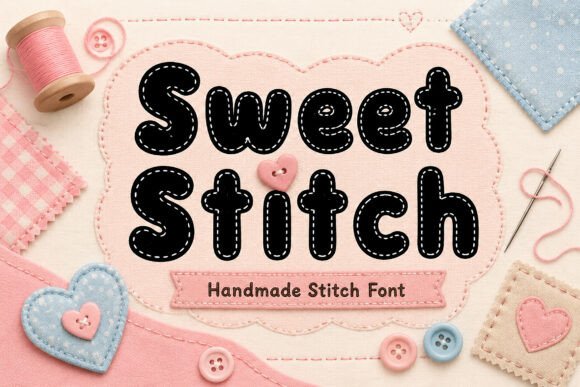
Sweet Stitch: Integrating Handmade Typography into Creative Workflows
In the landscape of digital design and physical crafting, typography often serves as the primary vehicle for tone. While clean sans-serifs and traditional serifs have their place in corporate and editorial work, a significant sector of the creative economy relies on fonts that convey warmth, nostalgia, and human touch. Sweet Stitch enters this space not merely as a decorative element, but as a functional tool designed to bridge the gap between digital precision and handmade authenticity. Inspired by cozy sewing projects and fabric crafts, this display font offers a specific aesthetic solution for creators who need to replicate the texture of needlework without the time investment of hand-embroidery.
Understanding where Sweet Stitch fits within a broader production pipeline is essential for maximizing its utility. It is not a body text font intended for long-form reading; rather, it functions as a high-impact asset for headlines, logos, product labels, and short-form messaging. For professionals managing Etsy shops, Cricut businesses, or nursery branding, integrating this typeface requires a strategic approach to hierarchy, spacing, and material compatibility. The following sections outline practical methods for incorporating Sweet Stitch into various stages of the creative process, from initial concepting to final production.
Pre-Production Planning and Asset Compatibility
Before opening design software or cutting machines, successful implementation begins with assessing technical requirements and project scope. Sweet Stitch features playful stitched outlines and soft rounded shapes, which present unique considerations compared to standard vector fonts. During the planning phase, designers must evaluate whether the intricate details of the stitch lines will remain legible at the intended size. This is particularly critical for small-scale applications like clothing tags or sticker borders.
File format selection plays a pivotal role in workflow efficiency. For digital-only outputs such as social media graphics or web banners, OTF or TTF formats generally suffice. However, for makers utilizing vinyl cutters, laser engravers, or embroidery digitizing software, verifying SVG compatibility is necessary. The internal "stitch" lines in Sweet Stitch can sometimes create unnecessary cut paths or complex fill areas. Pre-production testing involves importing the font into your specific hardware software (such as Cricut Design Space, Silhouette Studio, or Brother PE-Design) to ensure the letterforms translate correctly without requiring excessive node editing.
Color palette planning should also occur at this stage. Because the font mimics thread on fabric, it interacts differently with background colors than solid block letters. Designers should determine if the font will be used in a single color to simulate monochromatic embroidery or in multiple layers to create depth. Establishing these parameters early prevents mid-project revisions and ensures the handmade aesthetic aligns with the overall brand identity.
Digital Design Execution and Hierarchy Management
When moving into the active design phase, Sweet Stitch demands careful attention to typographic hierarchy. Its distinct personality means it naturally draws the eye, making it ideal for focal points. In a workflow involving mixed typography, pair Sweet Stitch with simple, neutral sans-serif or slab-serif fonts. This contrast prevents visual clutter and allows the stitched texture to stand out without competing with other decorative elements. For example, in a nursery print, use Sweet Stitch for the child’s name and a clean geometric sans-serif for the birth statistics.
Kerning and leading require manual adjustment when working with this typeface. Unlike system fonts optimized for automatic spacing, display fonts inspired by hand-stitching often benefit from custom tracking to enhance the organic feel. Tightening the spacing slightly can mimic the continuous flow of a sewing machine line, while increased leading can improve readability on textured backgrounds. When designing for sublimation or direct-to-garment printing, consider how the ink will absorb into the substrate. The delicate nature of the stitch lines may require a slight bolding effect in the design file to compensate for ink bleed on cotton or linen fabrics.
For users creating scalable vector graphics for sale or client delivery, organizing layers efficiently is key. Grouping the stitched elements separately from any accompanying solid shapes allows for easier recoloring later. If the project involves variable data, such as personalized greeting cards or wedding invitations, setting up paragraph styles and character presets in Adobe Illustrator or Canva streamlines the batch-processing workflow. This preparation reduces repetitive tasks when swapping names or dates across hundreds of designs.
Physical Production and Material Considerations
The transition from screen to physical product is where Sweet Stitch truly proves its value, but it also introduces material constraints. For Cricut and vinyl crafters, the complexity of the stitch pattern dictates the minimum cut size. Intricate interior loops may tear during weeding if the design is scaled too small. A practical workflow tip is to perform a test cut on scrap material at the smallest intended dimension before committing to the final piece. Using premium vinyl with strong adhesive properties can help maintain the integrity of fine stitch lines during application.
In sublimation workflows, the font’s texture responds well to polyester coatings and ceramic surfaces. However, because the design simulates thread, the perceived quality depends heavily on image resolution. Always export rasterized versions at 300 DPI or higher to preserve the crispness of the stitch definition. When pressing onto dark fabrics, consider using white glitter HTV or puff vinyl to add actual tactile dimension that matches the visual suggestion of the font. This multi-sensory approach elevates the perceived value of handmade goods and aligns the physical output with the digital intent.
For paper-based projects like scrapbooking or card making, the choice of paper stock influences the final appearance. Smooth cardstock provides the highest fidelity for printed stitch lines, while textured watercolor paper can enhance the cozy aesthetic but may break up fine details. Testing print proofs on the exact paper stock intended for the final run eliminates guesswork. Additionally, when combining digital printing with actual hand-stitching, use Sweet Stitch as a guide layer. Print the font in a light grey, stitch over it manually, and then remove the guide layer digitally if scanning back in, or leave it as a subtle shadow for a mixed-media effect.
Brand Consistency and Commercial Application
For entrepreneurs and small business owners, consistency builds recognition. Sweet Stitch works exceptionally well for establishing a cohesive visual identity across diverse touchpoints. When integrating this font into a brand kit, define clear usage guidelines. Specify which weights are approved for logos versus packaging, and establish minimum size requirements to maintain legibility. Creating a library of pre-approved lockups—combinations of the font with icons or illustrations—saves time during future marketing campaigns and ensures that freelance collaborators or virtual assistants maintain brand standards.
Licensing compliance is a non-negotiable aspect of commercial workflow. Before listing products on Etsy or selling branded merchandise, verify that your license covers the intended use case. Some licenses permit digital end products but restrict physical goods for resale, or vice versa. Keeping a digital record of the license agreement alongside your project files protects your business during audits or platform reviews. Furthermore, understanding the licensing terms helps in pricing strategy; if the font allows for unlimited physical sales, you can scale production without incremental royalty costs.
Marketing assets featuring Sweet Stitch should highlight the emotional connection of the product. When photographing items that utilize this typography, style them with complementary textures like yarn, raw linen, or wood to reinforce the handmade narrative. Social media templates built with this font should include safe zones for platform UI overlays, ensuring the stitched text remains visible in feeds and stories. By treating the font as a core component of the content strategy rather than an afterthought, creators can build a recognizable and trustworthy brand presence.
Optimizing Workflow Efficiency and Quality Control
Long-term use of specialty fonts like Sweet Stitch benefits from systematic organization. Maintain a dedicated folder structure for font-related assets, including the original installation files, license documents, and custom presets. For teams sharing computers or cloud accounts, syncing these resources prevents version conflicts and downtime. Regularly updating design software ensures compatibility with newer font rendering engines, which can improve the on-screen preview accuracy of detailed display typefaces.
Quality control checkpoints should be integrated at every handoff point. If outsourcing printing or manufacturing, provide detailed specifications regarding the font’s delicate nature. Include annotated proofs that call out critical stitch details that must be preserved. For digital deliverables, test files across multiple devices and browsers to ensure the embedded or outlined text renders consistently. Feedback loops from customers regarding readability or aesthetic appeal should inform future adjustments to spacing, sizing, or material choices.
Ultimately, Sweet Stitch serves as more than a decorative overlay; it is a strategic asset that communicates care, craftsmanship, and warmth. By approaching its implementation with the same rigor applied to layout grids or color theory, professionals can harness its charm effectively. Whether streamlining a Cricut production line, refining a nursery brand, or adding texture to digital content, the thoughtful integration of this typeface transforms standard projects into memorable, tactile experiences. Success lies not just in selecting the right font, but in adapting the entire workflow to honor the unique characteristics that make it special.