Armour Horse: Integrating Authentic Western Typography into Modern Design Workflows
In the vast landscape of typographic design, few genres carry as much cultural weight and immediate visual recognition as Western display typefaces. However, designers often face a dichotomy when selecting fonts for frontier-themed projects: choosing between historical accuracy that sacrifices legibility or modern readability that lacks authentic character. Armour Horse emerges as a solution to this specific design challenge, functioning as a bridge between vintage wood-type aesthetics and contemporary functional requirements. This typeface is not merely a decorative element; it is a comprehensive typographic system inspired by cowboy culture, rodeo traditions, and the signage of historic frontier towns.
The Anatomy of Frontier Authenticity
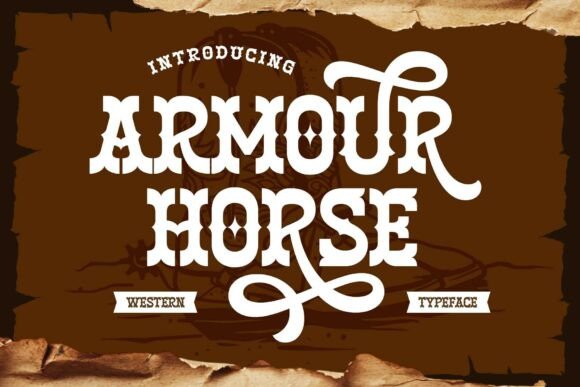
To understand the practical utility of Armour Horse, one must first analyze its construction. Unlike generic western fonts that rely solely on cliché motifs, this typeface is built upon strong serif foundations. The structural integrity of the letterforms ensures that even at smaller display sizes, the characters remain distinct and readable. This is a critical consideration for professional designers who need to maintain hierarchy without losing the thematic essence.
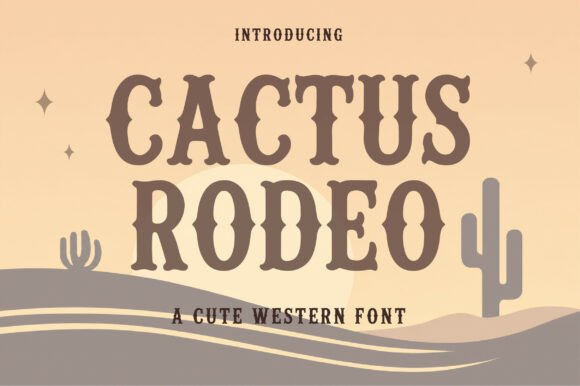
The most defining characteristic of Armour Horse is its use of reverse-contrast details. In traditional typography, vertical strokes are typically thicker than horizontal ones. Reverse contrast flips this convention, creating a visual tension that mimics the wear patterns found on vintage wooden signs and hand-painted saloon facades. This subtle manipulation of stroke weight signals "age" and "handcrafted quality" to the viewer subconsciously, without requiring artificial distressing or texture overlays. Furthermore, the inclusion of decorative spurs serves as a nod to equestrian heritage, but these elements are integrated into the glyph design rather than applied as external clip art. This integration ensures that the ornamentation feels native to the text flow rather than an afterthought.
Balancing Ruggedness with Elegance
A common pitfall in western design is creating visuals that feel overly aggressive or cartoonish. Armour Horse mitigates this risk through a rugged yet elegant appearance. The curves are deliberate, and the spacing is optimized for professional typesetting. This balance allows the font to transcend novelty use cases. It is suitable for premium branding where the goal is to evoke heritage and craftsmanship rather than parody. When evaluating typefaces for high-end packaging or boutique hospitality branding, this duality is often the deciding factor. The font commands attention in headlines while retaining enough sophistication to support a luxury narrative.
Strategic Applications Across Industries
The versatility of Armour Horse extends beyond simple aesthetic appreciation. Its specific design attributes make it uniquely suited for various commercial and creative applications. Understanding these use cases helps designers and business owners leverage the typeface effectively.
- Ranch and Agricultural Branding: For working ranches, equestrian centers, and agricultural businesses, authenticity is currency. Armour Horse provides a visual identity that aligns with industry traditions. The bold weight ensures visibility on signage, vehicle decals, and livestock equipment, while the stylistic alternates allow for customized wordmarks that avoid looking generic.
- Craft Beverage and Food Packaging: The whiskey, craft beer, and artisanal food markets rely heavily on heritage storytelling. Labels utilizing this typeface communicate small-batch production and historical roots. The reverse-contrast details pair exceptionally well with textured paper stocks and embossing techniques, enhancing the tactile experience of the product.
- Event Signage and Wayfinding: Rodeos, county fairs, and western festivals require typography that is legible from a distance and atmospheric up close. The strong serif foundations of Armour Horse ensure that directional signs and schedule boards remain functional, while the decorative elements reinforce the event theme consistently across all touchpoints.
- Apparel and Merchandise Design: Screen printing and embroidery demand clean vector lines. The robust construction of this typeface translates well to fabric, preventing ink bleed or thread breaks that can occur with overly intricate novelty fonts. It works effectively for both large back prints and subtle chest logos.
Maximizing Creative Flexibility Through OpenType Features
A significant advantage of Armour Horse over standard western display fonts is its extensive OpenType feature set. Professional typography is rarely about setting a single line of text in a default state; it is about customization and refinement. This typeface comes packed with tools that allow designers to tailor the output to specific spatial and stylistic needs.
Stylistic Alternates and Ligatures
The inclusion of stylistic alternates provides maximum creative flexibility. Designers can swap standard characters for variations that better fit the surrounding letters or the overall mood of the composition. This prevents the repetitive rhythm that can make display text look mechanical. Discretionary ligatures further enhance the custom feel by connecting specific letter pairs in unique ways. These connections mimic the fluidity of hand-lettering, breaking the rigid grid of digital typesetting. When designing a logo or a primary headline, utilizing these features transforms the font from a static asset into a dynamic design element.
Decorative Catchwords and Layout Elements
One of the most practical inclusions in Armour Horse is the set of decorative catchwords. In vintage poster design and editorial layouts, catchwords serve as visual anchors and transitional elements. Having these built directly into the font family saves designers from sourcing separate vector graphics that may not match the typeface’s weight or style perfectly. These elements facilitate the creation of complex, layered compositions typical of old-town saloon posters or circus broadsides, streamlining the workflow for illustrators and layout artists.
Technical Considerations for Implementation
While the aesthetic qualities of Armour Horse are paramount, technical execution determines the success of the final product. Designers must consider several factors when implementing this typeface to ensure optimal results.
Multilingual Support and Character Sets: Western culture is inherently multicultural, spanning regions with diverse linguistic heritages. Armour Horse includes multilingual support, numbers, and punctuation, ensuring that brands can maintain visual consistency across different markets and languages. This is particularly relevant for tourism boards, international rodeo circuits, and heritage brands with global distribution. Verifying language support before beginning a project prevents costly redesigns later in the production cycle.
Hierarchy and Pairing: As a bold display typeface, Armour Horse demands careful pairing. It functions best as a primary headline or focal point. Pairing it with other highly decorative fonts often leads to visual clutter. Instead, combine it with clean sans-serifs or understated slab serifs for body copy. The goal is to let the western character of Armour Horse shine without competing for attention. In digital environments, ensure that web font loading strategies are optimized, as display fonts with extensive glyph sets can impact page performance if not managed correctly.
Print Production Nuances: When preparing files for print, specifically for processes like letterpress or foil stamping, the strong serif foundations of this typeface are advantageous. However, designers should consult with their print providers regarding minimum stroke widths for the decorative spurs and reverse-contrast elements. While the font is designed for readability, extremely small applications may require adjusting tracking or opting for alternate glyphs to maintain clarity in physical media.
The Role of Typography in Cultural Storytelling
Beyond its technical specifications and commercial applications, Armour Horse serves a broader purpose in visual communication. Typography is a vessel for cultural memory. When a designer selects a typeface inspired by frontier towns and rodeo traditions, they are invoking a specific set of associations: independence, resilience, craftsmanship, and adventure. This typeface allows creators to tap into these narratives authentically.
For educators and researchers documenting western history, using period-appropriate typography enhances the immersive quality of educational materials. For business owners, it signals a respect for tradition that resonates with consumers seeking genuine experiences in an increasingly digital world. The font does not just spell out words; it contextualizes them within a rich historical framework.
Ultimately, the value of Armour Horse lies in its ability to deliver an authentic Wild West character while adhering to modern standards of graphic design. It respects the source material without being enslaved by it. Whether crafting a rustic brand identity, designing a premium handcrafted product label, or creating signage for a heritage site, this typeface offers a reliable, flexible, and aesthetically compelling foundation. It demonstrates that historical inspiration and contemporary functionality are not mutually exclusive but can coexist to create typography that is timeless, adventurous, and unmistakably western.