Bold Crayon: A Practical Guide to Using Playful Textured Fonts in Design
🖍️ Bold Crayon - Playful Textured Kids Font 🖍️
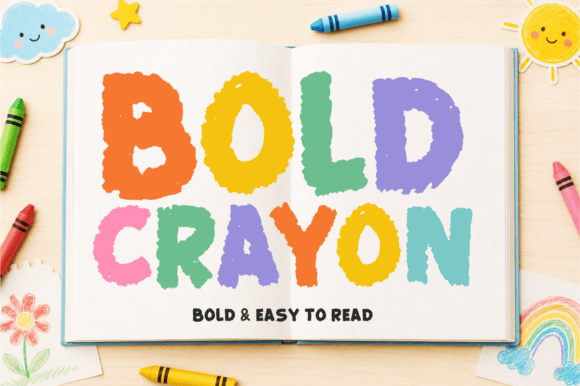
Hello, wonderful crafters, teachers, and creative designers 👋. In the vast landscape of digital typography, finding a typeface that genuinely captures the tactile warmth of childhood art is a unique challenge. Many fonts attempt to mimic hand-drawn aesthetics but often result in sterile vectors or illegible scrawls. Bring the bright, joyful energy of a children’s coloring book into your next project with Bold Crayon—the ultimate hand-drawn display font that is delightfully chunky and incredibly easy to read 🎨✨.
This article explores the functional applications, design characteristics, and practical considerations of using Bold Crayon. Whether you are an educator creating learning materials or a small business owner designing merchandise, understanding how to leverage this specific typographic style can elevate your visual communication from generic to genuinely engaging.
The Anatomy of Authentic Texture
To understand why Bold Crayon works effectively in professional and educational settings, one must look beyond its novelty. Inspired by real wax crayon drawings, Bold Crayon features thick, heavy letterforms with authentically textured, sketchy edges. This is not merely an aesthetic choice; it serves a functional purpose in visual hierarchy and emotional resonance.
The texture provides a "grain" that digital screens and smooth print surfaces typically lack. This grain creates micro-contrast, which helps the eye anchor onto the letterforms without the fatigue associated with perfectly sharp, high-contrast sans-serif fonts. It strikes the perfect balance between a fun, rustic handmade look and clean, high-impact legibility. For designers, this means the font carries its own weight as a graphical element, reducing the need for additional decorative textures or background noise in your layout.
Legibility vs. Novelty: Finding the Sweet Spot
A common pitfall in selecting "kid-friendly" fonts is sacrificing readability for whimsy. If a parent cannot read a worksheet title quickly, or if a child struggles to recognize letter shapes during early literacy exercises, the design has failed regardless of how cute it looks. Bold Crayon addresses this by maintaining consistent x-heights and open counters despite its irregular edges. When evaluating this font for your project, test it at various sizes. Its strength lies in display usage—headlines, titles, and short phrases—rather than dense body copy.
Practical Applications Across Industries
Whether you are creating educational tools for toddlers or colorful merchandise for kids, this font adds an instant splash of cheer and warmth to any canvas 🌈🧸. However, its utility extends well beyond nursery decor. Here is how different sectors can practically apply this typeface:
Educational Materials and Early Literacy
For teachers and curriculum developers, typography plays a silent role in learning. The organic shape of Bold Crayon mimics the motor skills children are developing when they first learn to write. Using a font that mirrors their own artistic output can create a sense of familiarity and safety in learning environments.
- Flashcards and Sight Words: The heavy weight ensures clarity from a distance, while the texture keeps the cards feeling approachable rather than clinical.
- Classroom Signage: Labels for bins, reading corners, and activity stations benefit from the friendly authority this font conveys.
- Worksheet Headers: Differentiating instructions from content becomes easier when the header uses a distinct, warm typeface like Bold Crayon.
Children’s Merchandise and Packaging
In the competitive market of children’s products, packaging must communicate age-appropriateness instantly. Consumers scanning shelves associate smooth, geometric fonts with technology or older demographics. Conversely, the wax-crayon aesthetic signals "safe," "creative," and "young."
- Apparel Graphics: T-shirts and hoodies require fonts that hold up to screen printing. The solid mass of Bold Crayon prevents ink bleed issues common with thinner novelty fonts.
- Toy Packaging: Use the font for product names to emphasize play value over technical specifications.
- Party Supplies: Invitations, banners, and cupcake toppers rely on immediate visual impact. This font reads clearly even when printed on textured cardstock or viewed in low-light party environments.
Digital Content and Social Media
Content creators focusing on parenting, DIY crafts, or family lifestyle often struggle to make text-based graphics feel personal. Standard web fonts can feel too corporate for a blog post about toddler activities. Integrating Bold Crayon into social media templates creates a cohesive brand identity that feels human and accessible. Because the font has inherent texture, it pairs exceptionally well with flat color backgrounds, eliminating the need for complex photo editing to achieve a vintage or handmade vibe.
Design Pairings and Layout Considerations
Using a display font effectively requires knowing what not to do. Bold Crayon is a protagonist; it demands attention. To maintain professional polish, consider these pairing strategies:
Contrast with Clean Sans-Serifs: Because Bold Crayon is highly textured and informal, pair it with a neutral, geometric sans-serif for body text (such as Montserrat, Open Sans, or Arial). This contrast enhances the readability of the supporting content while letting the display font shine. Avoid pairing it with other handwritten or distressed fonts, as this creates visual chaos and reduces legibility.
Color Selection Matters: While the font mimics wax crayons, you are not limited to primary colors. Pastel palettes soften the heavy weight for baby-related projects, while vibrant neons energize designs for older children. Dark charcoal or navy blue can offer a more sophisticated alternative to pure black, maintaining the softness of the crayon aesthetic while ensuring high contrast ratios for accessibility.
Whitespace is Essential: Chunky fonts consume significant visual space. Allow generous margins and padding around Bold Crayon text. Crowding it against images or other text elements negates its playful nature and makes the design feel cramped. Let the letterforms breathe to preserve their hand-drawn charm.
Evaluating Suitability for Your Project
Before committing to Bold Crayon, conduct a brief suitability assessment. Not every project requiring a "fun" vibe needs a crayon texture. Ask yourself the following questions to ensure alignment with your goals:
- Who is the primary reader? If the audience includes adults reading detailed information, use this font sparingly for emphasis only. If the audience is pre-literate children or the message is purely emotional/decorative, you have more freedom.
- What is the reproduction method? This font excels in print, vinyl cutting, and digital displays. However, extremely small embroidery or low-resolution faxing may lose the subtle edge details that define its character.
- Does it match the brand voice? Bold Crayon communicates nostalgia, creativity, and youth. It does not communicate luxury, corporate stability, or urgent warnings. Ensure the emotional tone aligns with your message.
Technical Tips for Best Results
To maximize the quality of your output when working with textured display fonts, keep these technical tips in mind:
Avoid Artificial Styling: Do not apply faux bold, italic, or shadow effects via your design software. These effects distort the carefully crafted edge textures and can create artifacts. Use the font exactly as designed. If you need variation, adjust tracking (letter-spacing) slightly, but avoid tightening it too much, as the irregular edges need room to avoid overlapping awkwardly.
Resolution Awareness: When designing for print, ensure your canvas is set to at least 300 DPI. The rough edges of Bold Crayon can appear pixelated or jagged at lower resolutions, which looks like a printing error rather than a stylistic choice. For web use, export as SVG where possible to maintain crisp edges at any zoom level.
Licensing Compliance: Always verify the license for your specific use case. Personal crafting projects often have different licensing terms than commercial merchandise or educational resources sold on marketplaces. Respecting intellectual property ensures your creative business remains sustainable and ethical.
Final Thoughts on Hand-Drawn Typography
Typography is more than just arranging letters; it is about setting a tone before a single word is processed cognitively. Bold Crayon succeeds because it bridges the gap between digital precision and analog warmth. It reminds us that behind every screen and printed page is a human desire for connection, play, and creativity.
By understanding its strengths in texture, legibility, and emotional impact, you can move beyond using it as a mere decoration. Instead, treat Bold Crayon as a strategic design tool that brings authenticity to educational resources, joy to children’s products, and warmth to digital content. When used with intention and paired thoughtfully, it transforms standard layouts into inviting experiences that resonate deeply with both young audiences and the adults who create for them.