Evaluating Spooky Moon for Seasonal Design: A Practical Guide to Style and Application
Selecting the appropriate typography for seasonal projects requires balancing thematic relevance with functional legibility. While many display fonts lean heavily into caricature, Spooky Moon occupies a specific niche as a hauntingly fun Halloween display font designed to bridge the gap between eerie atmosphere and playful accessibility. For designers, crafters, and content creators aged 20 to 50 who are evaluating resources for upcoming projects, understanding where this typeface fits within the broader landscape of horror-inspired design is essential. It is not merely a novelty asset; it is a specialized tool with distinct strengths and limitations that must be weighed against project requirements.
Defining the Aesthetic: Handcrafted Horror vs. Digital Precision
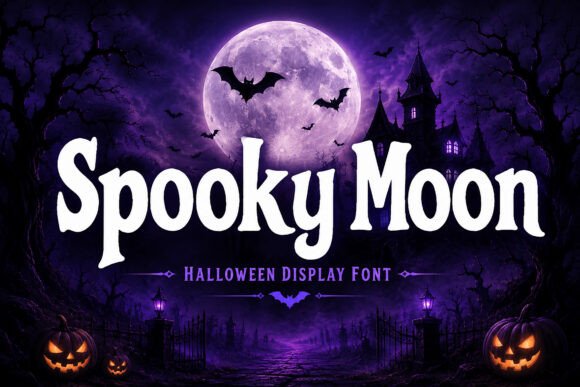
Spooky Moon distinguishes itself through bold letterforms and eerie curves that suggest a handcrafted origin rather than sterile digital generation. In the current market of seasonal typography, there is often a dichotomy between clean, vector-perfect horror fonts and distressed, grunge-heavy styles. Spooky Moon sits in a middle ground that retains high-quality edges while incorporating organic irregularities. This "handcrafted horror-inspired style" provides a texture that feels authentic to traditional Halloween aesthetics without sacrificing the scalability required for modern digital and print media.
When comparing this typeface to standard serif or sans-serif options modified for Halloween, the difference lies in intentionality. Modified standard fonts often lack the cohesive narrative found in dedicated display typefaces. Spooky Moon offers consistent stylistic choices across uppercase and lowercase letters, numbers, and punctuation. This consistency is vital for branding projects or merchandise where disjointed typography can undermine professional credibility. However, users should note that the decorative nature of these letterforms means they function strictly as display text. They are not suitable for body copy, long-form reading, or user interface elements where rapid comprehension is necessary.
Ideal Use Cases and Practical Applications
The versatility of Spooky Moon makes it a viable candidate for various creative verticals, but its effectiveness depends on the specific context of the application. Based on its weight and character set, it performs exceptionally well in scenarios requiring immediate visual impact and emotional resonance.
- Halloween Party Invitations and Event Collateral: The font’s balance of mystery and playfulness makes it ideal for social events. Unlike extreme gore-style fonts that may alienate general audiences, Spooky Moon maintains an inviting tone suitable for mixed-age gatherings.
- Social Media Graphics and YouTube Thumbnails: Bold letterforms are critical for thumbnail readability at small sizes. The high contrast and distinct silhouette of Spooky Moon ensure legibility even when scaled down for mobile feeds or video previews.
- Merchandise and Packaging: For T-shirt designs, mug prints, and packaging, the font’s PUA encoding allows access to special characters and ligatures without complex software. This feature streamlines the workflow for creators using Cricut or Silhouette machines for physical products.
- Horror Movie Posters and Book Covers: While effective for titles, designers should evaluate whether the "playful" aspect aligns with serious horror genres. It excels in dark comedy, YA horror, or campy slasher themes but may clash with psychological thrillers requiring austere minimalism.
Technical Considerations and Workflow Integration
Beyond aesthetics, technical compatibility determines whether a font is a practical addition to your resource library. Spooky Moon includes multilingual support, which is a significant advantage over many niche display fonts limited to basic Latin characters. This expands its utility for international campaigns or bilingual packaging. Furthermore, the inclusion of both uppercase and lowercase sets provides typographic flexibility; some horror fonts offer only capitals, forcing awkward spacing and reducing layout variety.
Installation and usage are straightforward across Mac and Windows environments. The PUA (Private Use Area) encoding is particularly relevant for crafters and designers who do not use professional typesetting software like Adobe Illustrator. This encoding maps special glyphs to standard keyboard characters, making them accessible in basic programs like Microsoft Word or Cricut Design Space. When evaluating alternatives, verify if they offer similar accessibility features, as non-PUA encoded fonts often require advanced software knowledge to utilize fully.
Comparative Analysis: When to Choose Alternatives
While Spooky Moon is a robust option, it is not the universal solution for every autumnal or horror-themed project. Making an informed decision involves recognizing when a different category of typeface would yield better results.
Legibility vs. Atmosphere Tradeoffs
If your project involves dense information, such as event schedules, pricing tables, or safety instructions for a haunted house, Spooky Moon should be restricted to headlines only. Its decorative curves reduce reading speed. In these instances, pair it with a clean, neutral sans-serif or a simple slab serif for body text. Attempting to force a display font into functional roles creates friction for the end-user and violates core accessibility principles.
Tone Calibration
Designers must accurately assess the desired emotional response. Spooky Moon leans toward "hauntingly fun" and "creepy charm." If the objective is genuine terror, visceral disgust, or historical accuracy (e.g., Victorian gothic), this font may feel too whimsical. Alternative categories to research include blackletter for historical gravity, distressed grunge for decay, or sharp geometric sans-serifs for modern psychological tension. Conversely, if the project targets young children or family-oriented brands, ensure the "horror-inspired" elements do not cross the threshold into frightening territory. Spooky Moon generally navigates this balance well, but always test with a sample audience if the demographic is sensitive.
Licensing and Commercial Viability
Always review the specific license agreement accompanying Spooky Moon before commercial deployment. While the font supports merchandise and branding, licensing tiers often differentiate between personal use, small business commercial use, and extended enterprise licensing. Comparing this against free open-source alternatives is necessary for budget-conscious projects. Free alternatives may lack the refinement, multilingual support, or customer service associated with premium typefaces like Spooky Moon, potentially costing more in revision time later.
Strategic Pairing and Layout Advice
To maximize the effectiveness of Spooky Moon, consider how it interacts with other design elements. Because the font possesses significant personality and visual weight, it demands negative space. Crowding Spooky Moon against busy illustrations or photographic backgrounds diminishes its impact. Effective layouts often utilize solid color blocks or subtle textures behind the text to maintain contrast.
When pairing with secondary typefaces, avoid other highly decorative scripts or serifs that compete for attention. A restrained, modern grotesque or a monospaced font often provides the best counterpoint, grounding the whimsy of Spooky Moon with structural stability. This juxtaposition enhances readability and creates a sophisticated design hierarchy that elevates the overall project beyond simple seasonal decoration.
Making the Final Decision
Spooky Moon represents a strong contender for designers seeking a versatile, mid-tone Halloween typeface. Its combination of bold aesthetics, technical accessibility via PUA encoding, and multilingual support addresses common pain points in seasonal design workflows. It is particularly well-suited for creators producing social content, party stationery, and lighthearted horror merchandise.
However, successful implementation requires honest evaluation of project goals. If absolute legibility, severe tonal seriousness, or extensive body text support is required, exploring alternative categories is advisable. By treating Spooky Moon as a specialized instrument rather than a catch-all solution, designers can leverage its unique creepy charm to create work that is both visually engaging and functionally sound. Ultimately, the right choice depends on aligning the font’s inherent characteristics with the specific communicative needs of your audience and medium.