Evaluating Jersey Number: A Practical Guide to Athletic Display Typography
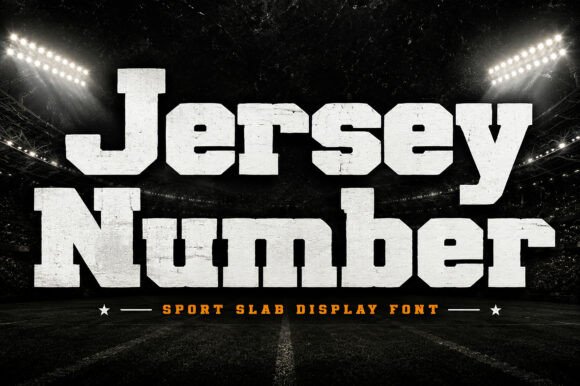
Selecting the appropriate typeface for sports branding, merchandise, or competitive gaming requires balancing aesthetic impact with functional legibility. Jersey Number enters this space as a specialized display font designed to replicate the robust lettering found on classic team uniforms. Unlike generic sans-serif fonts that are often adapted for athletic use, Jersey Number is engineered from the ground up with a deep-seated athletic spirit. It features bold slab-style figures and sturdy block foundations that communicate competitive energy immediately.
For designers and brand managers aged 20–50 who are currently comparing typographic options, understanding the specific utility of this font is essential. It is not a universal solution for every design challenge, but rather a targeted tool for specific visual contexts. This evaluation explores where Jersey Number excels, where it falls short compared to alternatives, and how to determine if it is the correct asset for your current project.
Defining the Aesthetic: Slab Serifs and Block Foundations
To evaluate Jersey Number effectively, one must first understand its classification. It sits firmly within the athletic slab-serif and block lettering category. The design prioritizes weight and presence over elegance or fluidity. The letterforms are constructed with uniform stroke widths and squared terminals, mimicking the physical constraints of stitched tackle twill or screen-printed vinyl used in traditional sportswear manufacturing.
This distinction matters when comparing it to other "sporty" fonts. Many modern athletic typefaces lean toward futuristic, italicized sans-serifs intended to convey speed and technology. Jersey Number, conversely, conveys heritage, physicality, and institutional strength. Its visual DNA is closer to varsity jackets and baseball scoreboards than to e-sports overlays or tech-wear branding. When assessing whether this font fits your brief, consider whether your goal is to project modern velocity or established, tangible power.
Key Visual Characteristics
- Sturdy Block Foundations: The base of each character is wide and planted, providing a sense of stability that prevents the text from looking top-heavy even at large sizes.
- Athletic Charisma: The proportions are optimized for names and numbers, ensuring that kerning remains consistent across varying character widths typical in roster listings.
- Championship-Ready Facade: The font includes stylistic alternates and ligatures often required for authentic-looking team branding without requiring manual vector manipulation.
Comparative Analysis: Jersey Number vs. Alternatives
When researching typography for athletic projects, you will likely encounter three primary categories of alternatives. Understanding how Jersey Number compares to these options helps clarify its specific value proposition.
Versus Standard Geometric Sans-Serifs
Futuristic geometric sans-serifs are the default choice for many contemporary sports brands due to their clean lines and digital versatility. However, they often lack the tactile nostalgia of Jersey Number. If your project requires a sleek, aerodynamic look suitable for performance apparel or mobile app interfaces, a geometric sans-serif may be superior. Jersey Number is the better choice when the objective is to evoke tradition, collegiate spirit, or streetwear authenticity. It carries a visual weight that thin-lined geometrics cannot achieve without appearing artificial.
Versus Vintage Hand-Lettering
Authentic vintage scripts and hand-drawn block letters offer unique character but present significant production challenges. They often lack comprehensive character sets, OpenType features, or consistent baselines. Jersey Number offers a middle ground: it retains the confident, vivacious aesthetic of mid-century athletic graphics while providing the technical reliability of a modern digital font. For merchandise production where consistency across hundreds of SKUs is mandatory, Jersey Number reduces the risk of alignment errors common with distressed or hand-lettered alternatives.
Versus Generic Varsity Fonts
The market is saturated with free or low-cost varsity fonts. While these may suffice for casual flyers or internal documents, they frequently suffer from poor hinting, limited language support, and rigid spacing. Jersey Number distinguishes itself through professional-grade construction. The slab serifs are integrated into the structure rather than applied as an afterthought, resulting in better readability at smaller sizes and cleaner edges during embroidery digitization or vinyl cutting.
Strategic Fit: Best Use Cases and Applications
Jersey Number is most effective when deployed in environments where immediate recognition and bold statement-making are paramount. Based on its design attributes, it is particularly well-suited for the following applications:
- Team Identity and Logos: The font’s inherent athleticism makes it ideal for primary wordmarks. Its blocky structure allows for easy integration with mascots and shield icons without competing for visual attention.
- Merchandise and Apparel: Because the letterforms mimic physical manufacturing techniques, designs created with Jersey Number translate naturally to screen printing, heat transfer, and embroidery. The sturdy strokes prevent breakage during production.
- Gaming Titles and E-Sports: While many gaming fonts are futuristic, retro-gaming and simulation genres benefit from Jersey Number’s nostalgic quality. It bridges the gap between digital entertainment and physical sport.
- Event Posters and Signage: In high-noise visual environments like stadium signage or concert posters, the high x-height and open counters ensure legibility from a distance.
Tradeoffs and Limitations: When to Look Elsewhere
No typeface is universally applicable. Recognizing the limitations of Jersey Number is just as important as understanding its strengths. There are several scenarios where this font may hinder rather than help your design objectives.
Body Copy and Long-Form Text
Jersey Number is strictly a display typeface. Its heavy weight and condensed proportions make it fatiguing to read in paragraphs longer than a few words. For editorial content, player biographies, or website body text, you must pair it with a highly legible sans-serif or humanist typeface. Attempting to use Jersey Number for informational hierarchy below the headline level will result in poor user experience and accessibility issues.
Minimalist and Luxury Branding
If your brand positioning leans toward luxury, minimalism, or refined elegance, Jersey Number’s boisterous personality may clash with your message. The font communicates grit and volume; it does not whisper. For high-end athletic fashion lines or corporate sponsorships requiring subtlety, a lighter-weight serif or a refined grotesque would be more appropriate.
Digital Interface Constraints
While excellent for static graphics, the thick strokes of Jersey Number can bleed together on low-resolution screens or at very small pixel sizes. If your primary deliverable is a mobile interface where space is at a premium, test the font extensively across devices. You may find that a dedicated UI font with athletic styling offers better rendering performance for navigation elements.
Decision Factors for Design Professionals
When finalizing your typography selection, consider the following practical factors to ensure Jersey Number aligns with your workflow and output requirements.
Production Compatibility: Verify that the font’s vector points are clean if you plan to send files directly to manufacturers. Jersey Number’s block foundations generally simplify the digitizing process for embroidery, but always request a sew-out sample for new vendors.
Licensing Scope: Athletic fonts are frequently used on merchandise for resale. Ensure your license covers commercial product sales, not just digital display. Jersey Number typically targets this commercial use case, but verifying the specific EULA prevents legal complications down the line.
Pairing Potential: Evaluate your existing brand system. Jersey Number pairs best with simple, neutral supporting typefaces. If your brand already uses a complex decorative font for secondary elements, adding Jersey Number may create visual conflict. It functions best as the dominant voice in a typographic hierarchy.
Making the Final Selection
Jersey Number represents a deliberate stylistic choice rather than a safe, neutral default. It is an audacious display font that succeeds when the goal is to amplify creations with a confident, vivacious facade. For projects rooted in baseball, football, streetwear, or collegiate nostalgia, it offers a level of authenticity that generic alternatives struggle to match.
However, informed decision-making requires acknowledging its boundaries. It is a specialist tool for headlines, names, and numbers, not a comprehensive typographic system. By weighing its robust athletic charisma against the need for versatility and legibility, you can determine whether Jersey Number is the championship-ready asset your project demands or if a different typographic approach better serves your strategic goals. Ultimately, the right choice depends on whether your audience needs to feel the heritage of the game or simply read the information efficiently.