Evaluating Dustero: When to Choose Rugged Cartoon Serifs for Western Branding
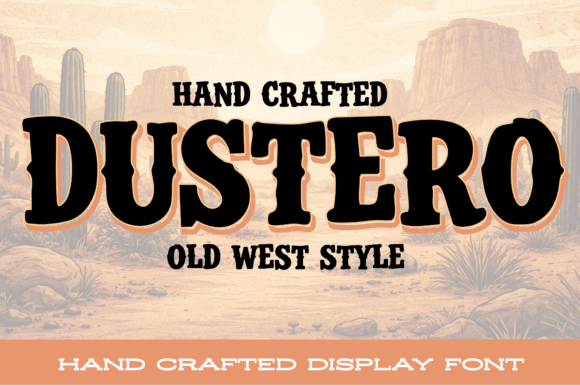
Selecting typography for western-themed projects often involves navigating a spectrum between historical accuracy and modern stylization. Dustero occupies a specific niche within this landscape as a bold, rough-edged cartoon cowboy font that prioritizes character over strict period correctness. Inspired by old west signage and desert grit, it features chunky serifs, hand-drawn imperfections, and subtle distressing. For designers and brand managers evaluating typeface options, understanding where Dustero fits requires looking beyond its aesthetic appeal to assess its functional strengths, limitations, and appropriate use cases compared to other display fonts.
Defining the Aesthetic: Playful Grit vs. Historical Replica
Dustero is distinct because it bridges two typically opposing design sensibilities: the ruggedness of frontier life and the accessibility of cartoon illustration. Many western fonts lean heavily into one or the other. Historical replicas attempt to mimic 19th-century wood type with precise, sharp edges and authentic wear patterns. Conversely, novelty western fonts often sacrifice texture for exaggerated shapes that can feel juvenile. Dustero’s value proposition lies in its hybrid nature. The chunky serifs provide the structural weight associated with traditional saloon signage, while the hand-drawn imperfections soften the tone, making it approachable rather than severe.
This balance makes it particularly relevant for contemporary brands that want to evoke a western vibe without appearing like a museum exhibit or a costume party. The subtle distressing is engineered to suggest age and exposure to the elements without compromising legibility at medium sizes. When comparing Dustero to cleaner slab serifs, the tradeoff is versatility for personality. A geometric slab serif may be more adaptable across diverse media, but it lacks the inherent narrative texture that Dustero provides immediately upon application.
Comparative Analysis: Dustero Against Common Alternatives
When building a western or rustic identity, professionals typically evaluate several categories of typefaces. Understanding how Dustero compares to these alternatives helps clarify decision-making.
- Vintage Wood Type Revivals: These fonts are historically accurate and excellent for authenticity. However, they can sometimes feel too serious or academic for consumer packaging or playful branding. Dustero offers a similar silhouette but with a lighter emotional weight, making it better suited for lifestyle brands targeting younger demographics.
- Clean Slab Serifs: Fonts like Rockwell or Roboto Slab offer superior readability and neutrality. They are safer choices for body copy or corporate identities requiring long-term flexibility. Dustero should not replace these in functional roles; rather, it serves as a specialized accent tool where clean slabs might feel too sterile.
- Hand-Lettered Brush Scripts: Script fonts convey craftsmanship and human touch but often struggle with scalability and quick recognition. Dustero maintains the hand-made feel through its irregularities while retaining the instant readability of block lettering. This makes it a stronger candidate for logos and headlines where immediate impact is necessary.
- Hyper-Distressed Grunge Fonts: Some display fonts prioritize texture to the point of illegibility. While visually striking in large formats, they fail at smaller scales. Dustero’s distressing is restrained enough to maintain character integrity down to poster subhead sizes, offering a practical middle ground.
Optimal Use Cases and Application Contexts
Dustero performs best when the design objective aligns with its specific tonal qualities. It is not a universal solution for all western aesthetics, but it excels in scenarios requiring a blend of nostalgia and modern playfulness.
Packaging and Product Labeling
In retail environments, packaging must communicate genre instantly. Dustero’s bold weight and textured edges create strong shelf presence, particularly for artisanal goods, craft beverages, and outdoor gear. The font’s imperfections suggest handmade quality, which supports premium pricing narratives for small-batch products. However, designers must ensure sufficient contrast against busy backgrounds. Because the font itself contains visual noise, pairing it with solid color fields or simple photography is usually more effective than placing it over complex textures.
Event Signage and Posters
For festivals, rodeos, or themed hospitality venues, Dustero captures attention without feeling aggressive. Its cartoon-inspired roots make it welcoming for family-oriented events, whereas stricter historical fonts might imply an adults-only or educational context. The typeface holds up well in large-format printing, where the subtle distressing becomes a visible feature rather than digital artifacting. When designing posters, consider using Dustero strictly for the primary headline and switching to a complementary sans-serif or clean slab for secondary information to establish clear typographic hierarchy.
Digital Interfaces and Social Media
Using textured display fonts digitally requires caution. On low-resolution screens or small mobile displays, the fine details of Dustero’s distressing may disappear or create moiré effects. It is most effective in digital contexts when used at larger sizes, such as hero banners or Instagram story overlays. For UI elements like navigation menus or button text, a simpler alternative is recommended to preserve usability. The font works exceptionally well in video content and motion graphics, where the static imperfections add organic warmth to animated sequences.
Technical Considerations and Pairing Strategies
Evaluating Dustero also involves practical production considerations. As a display font with intentional irregularities, it demands careful handling during the design process.
Kerning and Spacing Adjustments
Hand-drawn style fonts often have inconsistent metrics compared to mechanically generated typefaces. Designers should expect to perform manual kerning adjustments, especially in all-caps settings. The chunky serifs can create uneven negative space between certain character pairs. While this contributes to the authentic feel, excessive gaps can disrupt reading flow in longer headlines. Testing the typeface at actual output size early in the design phase prevents costly revisions later.
Effective Font Pairings
Dustero has a dominant personality that can overwhelm weaker typefaces. Successful pairings rely on contrast rather than similarity.
- Neutral Sans-Serifs: Geometric or humanist sans-serifs provide a calm foundation that lets Dustero shine as the focal point. The cleanliness of the supporting type balances the roughness of the display font.
- Monospaced Typefaces: For a utilitarian, "wanted poster" aesthetic, monospaced fonts complement Dustero’s irregularity with mechanical precision. This combination reinforces the frontier theme while maintaining modern design sensibilities.
- Simple Handwriting Fonts: If additional human touch is needed, choose a handwriting font with minimal texture. Avoid pairing Dustero with another distressed font, as competing textures create visual chaos and reduce overall legibility.
Limitations and Decision Factors
No typeface is without drawbacks, and acknowledging Dustero’s limitations is essential for informed selection. The primary constraint is its specificity. This is not a workhorse font that can carry an entire brand identity across multiple touchpoints. It is a specialist tool designed for moments of high visual impact. Brands requiring a comprehensive type system may find Dustero useful only for seasonal campaigns or specific product lines rather than core identity.
Additionally, the cartoon influence, while playful, may not suit every interpretation of western culture. Projects aiming for somber, cinematic, or luxury interpretations of the frontier may find Dustero’s tone too lighthearted. In such cases, sharper serifs or refined scripts would better communicate sophistication. Conversely, projects targeting very young children might benefit from even rounder, simpler letterforms that lack the gritty texture entirely.
Licensing and format availability also factor into the evaluation. Ensure the chosen license covers intended commercial applications, particularly for merchandise or embedded web use. Verify that the font file includes necessary OpenType features if alternate characters or ligatures are desired to enhance the hand-drawn effect. Some versions of stylized fonts may lack extended language support, which could be a limiting factor for international campaigns.
Making the Final Assessment
Ultimately, choosing Dustero depends on whether the project benefits from its unique intersection of playfulness and ruggedness. It is an excellent choice when the goal is to signal western heritage with a contemporary, approachable twist. It solves the problem of wanting thematic resonance without historical heaviness. However, if the priority is maximum legibility, formal elegance, or systemic versatility, other categories of typefaces will serve better.
Designers should test Dustero in context before committing. Create mockups at actual size, evaluate performance across different backgrounds, and assess how it interacts with existing brand assets. The font’s charm lies in its imperfections, but those same imperfections require thoughtful integration to function effectively within professional design systems. By weighing its distinctive character against practical requirements and available alternatives, creatives can determine whether Dustero is the right instrument for their specific western branding challenge.