Evaluating Mountains Range Duo for Outdoor and Heritage Branding
Selecting the right typography is a foundational step in establishing brand identity, particularly for businesses rooted in outdoor culture, heritage craftsmanship, or adventure travel. The Mountains Range Duo presents itself as a specialized solution for these niches, offering a pre-paired combination of a handcrafted display script and a sturdy sans-serif. For designers and brand managers evaluating this typeface, understanding its specific utility, aesthetic limitations, and practical applications is essential to determining if it aligns with project goals. This evaluation explores the functional characteristics of the Mountains Range Duo to assist in the decision-making process.
Defining the Typeface Architecture
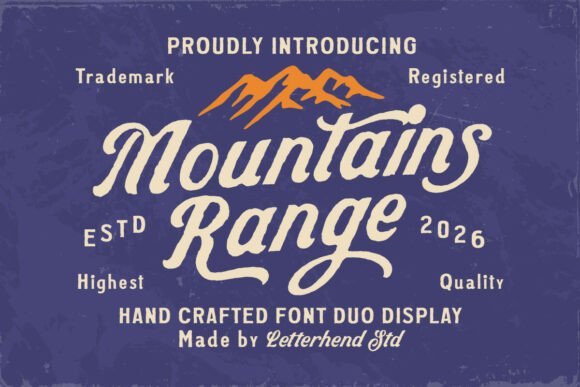
The Mountains Range Duo is not a single font but a coordinated system comprising two distinct typefaces designed to work in tandem. Understanding the role of each component is necessary for effective implementation.
- The Display Script: The primary component is a fluid, hand-drawn script characterized by organic terminals and varying stroke widths. Unlike formal calligraphy, this script mimics natural topography, with peaks and valleys that evoke horizon lines. It is intended exclusively for high-impact visual elements such as main logos, headline treatments, and poster titles.
- The Supporting Sans-Serif: The secondary component is a classic, bold sans-serif designed for utility. It provides the structural backbone for the branding system, handling subheaders, body copy, technical specifications, and legal text. Its clean geometry contrasts with the organic nature of the script, ensuring legibility and professional balance.
This dual structure addresses a common pain point in branding: the difficulty of pairing a decorative display font with a compatible text font. By providing both, the Mountains Range Duo reduces the risk of typographic dissonance and streamlines the initial design phase.
Aesthetic Alignment and Brand Signaling
Typography acts as a non-verbal signal of brand values. When considering the Mountains Range Duo, evaluators should assess whether its inherent aesthetic matches the intended brand message. This typeface family is engineered to communicate specific attributes:
Heritage and Authenticity
The hand-drawn texture and imperfect lines of the script suggest human craftsmanship rather than digital precision. This makes it suitable for brands emphasizing artisanal quality, tradition, or small-batch production. If a brand’s value proposition relies on modernity, technological innovation, or clinical precision, this typeface may send conflicting signals.
Rugged Exploration
The visual weight and organic flow are optimized for outdoor contexts. The typeface performs well when paired with natural photography, distressed textures, and earthy color palettes. It supports narratives centered on national parks, mountain resorts, camping gear, and adventure tourism. However, it may appear out of place in urban, luxury, or corporate financial contexts where sleekness and neutrality are preferred.
Practical Benefits and Functional Tradeoffs
Every typographic choice involves compromises. Evaluating the Mountains Range Duo requires weighing its specialized strengths against potential limitations.
Benefits for Niche Applications
The primary advantage of this duo is cohesion. Because the sans-serif was designed specifically to support the script, the x-heights, weights, and overall proportions are calibrated to create visual harmony. This saves significant time during the brand development process. Additionally, the distinctive character of the script aids in trademark differentiation within crowded outdoor markets, helping logos stand out against competitors using generic geometric sans-serifs or overused vintage scripts.
Considerations and Limitations
The specialized nature of the Mountains Range Duo also imposes constraints. The display script has limited versatility; it is generally unsuitable for extended reading, navigation menus, or small-scale UI elements due to its intricate details and variable baseline. Designers must rely heavily on the accompanying sans-serif for functional typography. Furthermore, because the script carries strong stylistic associations with "outdoor" and "vintage" themes, it may limit future brand pivots. A company planning to expand into tech-integrated apparel or minimalist lifestyle products might find the typeface restrictive over the long term.
Ideal Use Cases vs. Alternative Solutions
Determining fit requires matching the typeface capabilities to specific deliverables. The following breakdown helps clarify when the Mountains Range Duo is the optimal choice and when alternatives should be explored.
Strong Fit Scenarios
- Craft Brewery and Distillery Labels: The combination of expressive scripting for the product name and clean sans-serif for ABV, ingredients, and regulatory text mirrors standard industry labeling requirements perfectly.
- Vintage Travel Posters and Merchandise: The typeface captures the nostalgic aesthetic of mid-century park signage and souvenir graphics, making it ideal for gift shops and tourism boards.
- Rugged Apparel Branding: For clothing lines focused on durability and outdoor performance, the sturdy sans-serif anchors hang tags and care labels while the script defines the chest logo or patch design.
- Hospitality Signage: Mountain lodges, glamping sites, and retreat centers benefit from the welcoming yet rugged tone that balances warmth with authority.
When to Consider Alternatives
- Digital-First Interfaces: If the primary touchpoint is a mobile app or complex website, prioritize a versatile superfamily with multiple optical sizes over a display-focused duo.
- Corporate or Institutional Identity: Organizations requiring high degrees of neutrality and extensive language support should look toward comprehensive grotesque or humanist sans-serif families.
- Luxury or High-Fashion Brands: The rustic, handcrafted texture of Mountains Range Duo typically conflicts with the refined, polished aesthetics expected in premium luxury sectors.
- High-Density Information Design: For annual reports, manuals, or data-heavy publications, the display script offers no utility, and the included sans-serif may lack the necessary range of weights and widths.
Decision-Making Framework for Selection
Before licensing or implementing the Mountains Range Duo, stakeholders should conduct a brief audit against the following criteria to ensure alignment with strategic objectives.
- Audit Brand Adjectives: List five core brand descriptors. If three or more align with terms like "rugged," "handmade," "natural," "heritage," or "adventurous," the typeface is likely a strong candidate. If descriptors lean toward "sleek," "futuristic," "corporate," or "minimal," proceed with caution.
- Test Across Mediums: Mock up the typeface in both large-format (signage, posters) and small-format (business cards, social media avatars) contexts. Verify that the script remains legible at smaller sizes and that the sans-serif maintains adequate contrast in print and digital environments.
- Evaluate Long-Term Viability: Consider the brand’s five-year roadmap. Will the rustic aesthetic remain relevant as product lines expand? Typography is costly to change post-launch; ensure the Mountains Range Duo can grow with the organization.
- Assess Technical Requirements: Confirm that the included sans-serif covers all necessary glyphs, punctuation, and language sets required for target markets. While the script is the star, the sans-serif does the heavy lifting in daily operations.
The Mountains Range Duo serves as a comprehensive branding tool for a specific segment of the market. It excels in bringing an authentic, handcrafted soul to layouts that celebrate the outdoors and traditional craftsmanship. By understanding its architectural duality, recognizing its ideal applications, and acknowledging its boundaries, designers and brand strategists can make an informed decision about whether this typeface system will effectively support their visual identity. Ultimately, it is less about the letters themselves and more about whether they authentically extend an invitation to explore that resonates with the intended audience.