Evaluating Frontier Outlaw for Vintage Western Design Projects
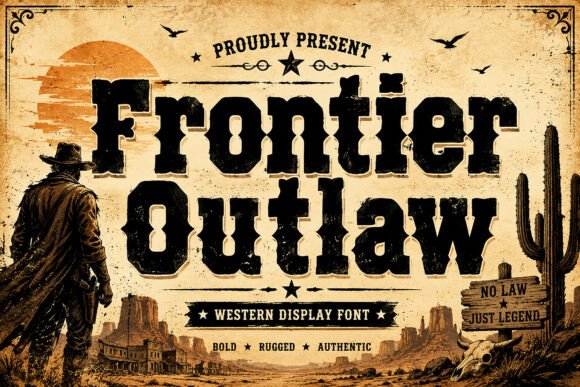
Selecting the appropriate typography is often the most critical decision in establishing a visual identity for western-themed projects. Frontier Outlaw has emerged as a notable option for designers seeking a bold vintage western display font that balances historical authenticity with modern legibility. Inspired by old saloon signs, wanted posters, and the rugged spirit of cowboy culture, this typeface offers strong slab-serif letterforms that convey immediate thematic context. However, like any specialized display font, it serves specific functional roles within a design system rather than acting as a universal solution.
For creative professionals and brand managers comparing typography options, understanding the distinct characteristics of Frontier Outlaw is essential. It is not merely a decorative element but a strategic tool for communicating heritage, durability, and Americana. This evaluation explores where this font excels, where it faces limitations compared to broader categories, and how to determine if it aligns with your specific project requirements.
Defining the Aesthetic and Functional Characteristics
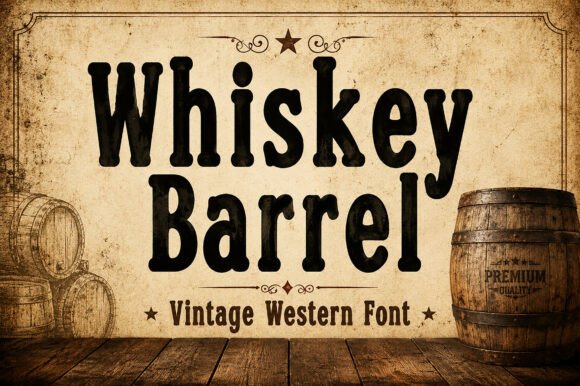
Frontier Outlaw distinguishes itself through its commitment to the slab-serif tradition while incorporating the irregularities associated with 19th-century woodblock printing. Unlike digital fonts that prioritize mathematical perfection, this typeface retains an authentic western character through subtle variations in stroke weight and serif structure. These imperfections are intentional design choices that prevent the letterforms from appearing sterile or overly manufactured.
The primary strength of this font lies in its visual weight. The robust serifs and high x-height make it exceptionally readable at large scales, which is a non-negotiable requirement for signage and packaging. When evaluating display fonts in this genre, many alternatives suffer from being too ornate to read quickly or too simplified to evoke a sense of history. Frontier Outlaw occupies a middle ground where the decorative elements support, rather than hinder, communication. This balance makes it particularly effective for:
- Whiskey and Craft Beverage Labels: Where shelf impact and heritage signaling are paramount.
- Rodeo and Event Posters: Requiring hierarchy and instant recognition from a distance.
- Apparel and Merchandise: Where the texture of the print interacts with fabric grain.
- Rustic Branding Packages: For businesses needing to establish an established, timeless presence.
Comparing Frontier Outlaw Against Alternative Styles
When researching western typography, designers typically encounter three distinct categories: ornamental Victorian styles, rough-hewn hand-lettering, and structured slab-serifs. Understanding how Frontier Outlaw compares to these alternatives helps clarify its best-fit scenarios.
Versus Ornamental Victorian Western Fonts
Many western fonts rely heavily on elaborate swashes, inline details, and complex shading reminiscent of circus posters or vaudeville bills. While these options offer high decorative value, they often struggle with versatility. Ornamental fonts can become illegible when scaled down or reproduced in single-color formats. Frontier Outlaw takes a more restrained approach. By focusing on solid forms rather than internal decoration, it maintains clarity across various media, from embroidered hats to monochrome business cards. If your project requires intricate detail for a standalone poster, an ornamental style may be superior. However, for cohesive branding systems requiring flexibility, Frontier Outlaw offers greater utility.
Versus Distressed Grunge Textures
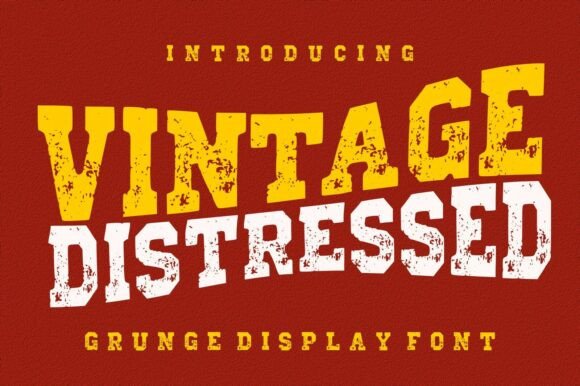
A common trend in western design is the use of pre-distressed textures to simulate age. While effective for creating instant atmosphere, heavily textured fonts can present technical challenges. Fine details may be lost in low-resolution printing or screen viewing, and the "dirty" aesthetic can sometimes clash with clean photography or modern layout grids. Frontier Outlaw provides a cleaner vector foundation. It suggests age through form and proportion rather than relying solely on surface noise. This allows designers to apply their own texture overlays or aging effects as needed, providing more control over the final output than a pre-textured alternative.
Versus Modern Geometric Slabs
Contemporary slab-serifs often feature uniform stroke widths and perfect geometry. While excellent for tech or corporate identities, they lack the historical resonance required for genuine western themes. Frontier Outlaw differs by embracing the idiosyncrasies of traditional craftsmanship. The comparison here is between precision and personality. If the goal is to merge western motifs with a sleek, futuristic aesthetic, a modern geometric slab might be preferable. For projects rooted in tradition, nostalgia, or organic materials, the humanist qualities of Frontier Outlaw provide a more appropriate emotional connection.
Practical Tradeoffs and Limitations
No typeface is without compromise, and acknowledging the limitations of Frontier Outlaw is vital for professional application. As a display font, it is engineered for headlines, logos, and short bursts of text. It lacks the optical sizing and spacing adjustments necessary for body copy. Attempting to use this font for paragraphs, legal disclaimers, or detailed product descriptions will result in poor readability and visual fatigue.
Furthermore, the bold nature of the letterforms demands adequate negative space. In cramped layouts or designs with dense information architecture, Frontier Outlaw can feel overwhelming. Designers must be willing to let the typography breathe, which may require reducing word counts or adjusting grid structures. Projects with strict spatial constraints or those requiring extensive textual content may need to pair this font with a complementary sans-serif or transitional serif for secondary information.
Another consideration is tonal specificity. Because the font carries such strong cultural associations, it immediately signals "Wild West" to the viewer. This is beneficial for themed projects but can be limiting for brands attempting a subtle or ambiguous regional identity. If the objective is to hint at western influences without overt stereotyping, a more neutral typeface might serve as a better foundation, reserving Frontier Outlaw for accent elements only.
Determining Fit for Specific Use Cases
Deciding whether to implement Frontier Outlaw should be based on a clear assessment of project goals and audience expectations. The following framework can assist in the evaluation process.
When Frontier Outlaw Is the Right Choice
- Heritage Storytelling: When the brand narrative centers on history, craftsmanship, or frontier values, the font acts as a visual shorthand for these concepts.
- High-Impact Environments: For trade show banners, storefront signage, or social media headers where capturing attention within seconds is necessary.
- Tactile Applications: The sturdy construction translates well to physical production methods like letterpress, laser engraving, wood burning, and embroidery.
- Thematic Consistency: When other design elements (photography, color palette, illustration style) already lean toward rustic or vintage aesthetics.
When to Consider Alternatives
- Corporate Professionalism: Financial services, legal firms, or healthcare providers operating in western regions usually require more conservative typography to maintain trust.
- Digital-First Interfaces: UI/UX design for apps or websites often benefits from optimized screen fonts; display fonts like this are best reserved for marketing assets rather than interface elements.
- Minimalist Modernism: If the design direction emphasizes whitespace, lightness, and contemporary luxury, the heavy visual mass of this font may create discord.
- Extended Text Settings: Books, magazines, or long-form web content require dedicated reading fonts with superior legibility metrics.
Integration Strategies for Balanced Design
Successfully utilizing Frontier Outlaw involves thoughtful pairing and contextual awareness. Because the font possesses significant personality, supporting elements should generally be more subdued. Pairing it with a clean, neutral sans-serif creates a dynamic contrast that enhances readability while allowing the display font to shine. Alternatively, combining it with a classic handwritten script can add a layer of personalization, though care must be taken to ensure the two styles do not compete for attention.
Color selection also plays a crucial role in maximizing effectiveness. Earth tones, muted pastels, and high-contrast black-and-white schemes reinforce the vintage aesthetic. Bright neon colors or gradients may create an unintended retro-futuristic or kitsch effect unless that is the specific creative intent. Additionally, considering the background texture is important; placing this font on a smooth white surface creates a different impression than placing it over weathered wood or kraft paper.
Ultimately, Frontier Outlaw represents a specialized tool in the typographic arsenal. Its value is derived not from universal applicability, but from its ability to solve specific communication challenges within the western and vintage design space. By weighing its authentic character against practical constraints and comparing it honestly against available alternatives, designers can make informed decisions that result in compelling, culturally resonant work. Whether creating a whiskey label that needs to stand out on a crowded shelf or a rodeo poster that captures the energy of the event, success depends on matching the font’s inherent strengths to the project’s unique demands.