Evaluating Playful Mess: When Imperfect Typography Fits Your Design Strategy
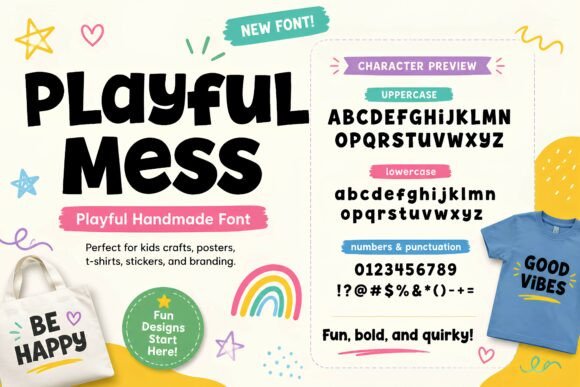
Selecting the right display font often involves balancing aesthetic appeal with functional communication. For projects requiring a sense of authenticity, warmth, or juvenile energy, polished geometric sans-serifs can sometimes feel too sterile or corporate. Playful Mess enters this space as a bold, quirky, and handmade display typeface designed specifically to counter that rigidity. Its defining characteristic is a deliberate imperfection in letter shapes, offering a visual texture that mimics hand-drawn markers or crayons rather than digital precision.
For designers, crafters, and small business owners evaluating typography options, understanding where Playful Mess fits within the broader ecosystem of display fonts is essential. It is not a universal solution for every branding need, but it serves as a highly effective tool for specific contexts where personality outweighs perfect legibility. This evaluation explores the practical applications, comparative advantages, and necessary tradeoffs of integrating this typeface into creative workflows.
Defining the Aesthetic: Intentional Imperfection vs. Digital Precision
To make an informed decision, one must first distinguish between genuine hand-lettering aesthetics and simulated distress. Playful Mess falls into the category of simulated handmade typography. Unlike true variable hand-lettering where no two letters are identical, this font maintains consistent glyph mapping while utilizing organic curves and uneven baselines to create a friendly, cheerful personality.
This distinction matters for production. Because it is a standardized font file rather than a set of unique vector illustrations, Playful Mess offers scalability and editability that pure illustration cannot match. You can type, resize, and adjust kerning dynamically. However, users comparing this against premium hand-lettering packs should note that repetition may occur in longer text strings. The "mess" is curated; it provides the vibe of chaos without the actual layout challenges of arranging individual hand-drawn assets.
Visual Weight and Texture
The boldness of Playful Mess is a primary functional attribute. In design hierarchy, weight dictates attention. Many playful or kid-friendly fonts suffer from thin strokes that disappear on merchandise or low-resolution screens. Playful Mess maintains substantial stroke width, ensuring that the quirky details remain visible even when scaled down for stickers or social media thumbnails. This makes it distinct from lighter, more delicate script alternatives that prioritize elegance over impact.
Comparative Analysis: Handmade Display vs. Alternative Styles
When researching typography for creative merchandise or classroom projects, you are likely weighing Playful Mess against several other categories. Understanding these comparisons helps prevent mismatched expectations.
- Versus Geometric Sans-Serifs: Fonts like Futura or Montserrat offer superior readability and neutrality. If your project requires conveying complex information, data, or corporate stability, Playful Mess is likely the wrong choice. It competes poorly in high-information density environments but wins in emotional engagement and approachability.
- Versus Traditional Scripts: Cursive or calligraphy fonts suggest sophistication, romance, or tradition. Playful Mess suggests spontaneity and youth. For a wedding invitation, a script is usually appropriate; for a children’s party supply brand or a casual café menu board, Playful Mess aligns better with the target demographic’s expectations.
- Versus Grunge/Distressed Fonts: While both categories embrace imperfection, grunge fonts often convey age, wear, or rebellion. Playful Mess conveys optimism and creation. The "mess" here is constructive, not destructive. Evaluators should ensure the emotional tone matches the brand voice before selecting based solely on the "imperfect" tag.
Optimal Use Cases and Practical Applications
The versatility of Playful Mess shines in mediums where tactile connection is valued. Based on current design trends and user feedback, the following applications represent the strongest fit for this typeface.
Merchandise and Physical Products
For t-shirts, stickers, and packaging, the bold forms of Playful Mess translate exceptionally well to print production. Screen printing and vinyl cutting require clean, closed paths and adequate spacing between elements. The chunky nature of this font reduces the risk of registration errors or peeling edges that plague thinner novelty fonts. Small business owners creating product labels will find that the friendly personality helps humanize commercial goods, making them feel artisanal rather than mass-produced.
Educational and Youth-Centric Design
In classroom projects and kids’ branding, legibility must coexist with fun. Playful Mess strikes a balance where the letterforms are recognizable enough for early readers to decode, yet stylized enough to maintain interest. Unlike overly decorative novelty fonts that obscure letter shapes, this typeface retains structural integrity. This makes it suitable for educational posters, birthday invitations, and activity books where clarity remains a priority alongside aesthetics.
Social Media and Digital Graphics
Digital platforms demand immediate visual recognition. On mobile screens, intricate details are often lost. The bold, simplified quirks of Playful Mess perform well in thumbnail sizes and Instagram stories. When used for headlines or short captions, it creates a pattern interrupt against the sea of standard system fonts typically seen in feeds. However, designers should avoid using it for body copy or long-form captions, as the irregular baseline can cause eye fatigue during extended reading.
Tradeoffs and Limitations to Consider
No typeface is without compromise. A professional evaluation requires acknowledging where Playful Mess may fall short compared to other resources.
Limited Character Sets: Like many display fonts in this niche, Playful Mess may have limited language support or fewer OpenType features (such as ligatures or alternate characters) compared to comprehensive text families. If your project requires extensive multilingual support or advanced typographic refinement, verify the character map before purchasing or downloading.
Tone Specificity: The font carries a strong inherent personality. It is difficult to make Playful Mess look serious or luxurious. If you anticipate needing to pivot your brand identity toward a more mature or minimalist aesthetic in the near future, this font may pigeonhole your visual language. It is best utilized as a secondary display face paired with a neutral workhorse font, rather than as the sole typographic element of a flexible brand system.
Spacing Requirements: Handmade-style fonts often have unconventional metrics. Users accustomed to the tight tracking of modern sans-serifs may find the default spacing loose or inconsistent. Be prepared to manually adjust kerning for specific word combinations to achieve optical balance. This adds time to the design process compared to using highly engineered text faces.
Decision Framework: Is Playful Mess the Right Resource?
Ultimately, the decision to use Playful Mess should be driven by project goals rather than trend adherence. Use the following criteria to evaluate fit:
- Audience Alignment: Does the target demographic value warmth, humor, and approachability over precision and authority? If yes, this font is a strong candidate.
- Medium Constraints: Will the design be viewed at small sizes or produced via methods requiring bold strokes? The weight of Playful Mess supports these technical needs.
- Content Volume: Is the text limited to headlines, logos, or short phrases? If you need to typeset paragraphs, look elsewhere.
- Brand Differentiation: Are competitors using clean, corporate typography? Adopting a handmade style like Playful Mess can provide immediate shelf differentiation in saturated markets.
For adults aged 20–50 managing creative projects, Playful Mess represents a strategic asset for specific niches. It bridges the gap between amateur charm and professional usability. By understanding its strengths in boldness and personality, alongside its limitations in versatility and text density, designers can deploy it effectively to create expressive, happy typography that resonates with audiences seeking authentic connection. Whether for a child’s bedroom decor, a boutique coffee label, or a vibrant social campaign, success lies in matching the font’s inherent playfulness with the appropriate communicative intent.