Little Pickie: A Practical Guide to Child-Centred Typography
Typography is often the silent ambassador of design, communicating tone and emotion before a single word is read. When designing for children, this non-verbal communication becomes even more critical. The typeface must bridge the gap between adult functionality and juvenile wonder. Presenting Little Pickie, a delightful, energetic, child-centred font that serves as a masterclass in balancing legibility with personality. It is ideal for crafting spirited projects that capture the innocence and joy of childhood without sacrificing professional polish.
For designers, educators, and business owners, selecting the right display font is a strategic decision. Little Pickie holds the charisma to introduce an atmosphere of merriment, conviviality, and playfulness to your typography. However, its value extends beyond mere aesthetics. Understanding the structural nuances and practical applications of this typeface allows creators to leverage its strengths effectively across various media, from physical merchandise to digital educational tools.
The Anatomy of Joy: Design Characteristics
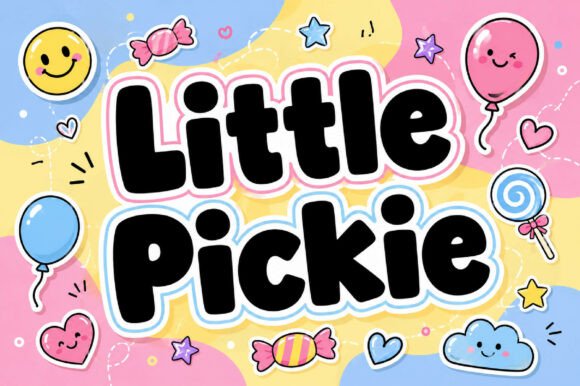
To understand why Little Pickie resonates so strongly with young audiences, one must look at its construction. It is not merely a standard sans-serif with rounded corners; it is shaped with stout, vibrant outlines and softened intriguing curves. These deliberate design choices serve specific psychological and functional purposes in child-centric design.
Visual Weight and Confidence
The uniform thick structure of Little Pickie provides a sense of stability and confidence. In early childhood development, bold shapes are easier to process than thin, intricate lines. The stout outlines ensure that the letterforms remain distinct even when scaled down for stickers or labels. This visual weight dons joyful letterforms that immediately catch the eye with allure and ebullience, creating an inviting entry point for young readers.
Softened Geometry for Approachability
Sharp angles can subconsciously signal caution or formality. Conversely, the softened curves in Little Pickie mimic the organic, safe shapes found in toys and nature. This geometric softness reduces cognitive friction, making text appear less like a rigid instruction and more like a friendly invitation. It is this specific characteristic that makes it the quintessential font gem for children-centric designs, fostering a sense of safety and warmth.
Strategic Applications Across Media
Versatility is the hallmark of a successful display font. While Little Pickie is undeniably playful, its utility spans multiple industries and formats. Creators should consider the following real-world scenarios where this typeface excels.
- Educational Materials: Classroom posters, flashcards, and worksheet headers benefit from the font’s high readability. The clear distinction between characters supports early literacy efforts while maintaining engagement.
- Product Packaging and Labels: Visible on posters, stickers, and book covers, Little Pickie is even popular on plaything labels. Its bold structure ensures brand names and safety information stand out on crowded retail shelves.
- Apparel and Merchandise: As a lively addition to kids' attire or merchandise, the font translates exceptionally well to screen printing and embroidery. The uniform thickness prevents ink bleed or thread breaks that often plague thinner novelty fonts.
- Digital Content: For social media content and website banners, the typeface injects cordiality and sprightliness into every creation, helping brands maintain a consistent, family-friendly voice across platforms.
Evaluating Suitability for Your Project
While Presenting Little Pickie offers immense creative potential, it is essential to evaluate whether it aligns with your specific project goals. Not every child-related project requires the same level of exuberance. Consider the following factors when deciding if this typeface is the right tool for your needs.
Audience Age Range
Little Pickie is optimized for early childhood through pre-adolescence. Its bubbly, energetic nature speaks directly to toddlers and primary school-aged children. If your target demographic skews toward teenagers or young adults, the font may perceive as too juvenile. However, for products aimed at parents of young children, the nostalgia and warmth evoked by the typeface can be a powerful conversion tool.
Hierarchy and Pairing
As a display font, Little Pickie is designed for headlines, titles, and short bursts of text. It is rarely suitable for long-form body copy due to its decorative nature. To create a cohesive design system, pair it with a clean, neutral sans-serif or a simple rounded body font. This contrast allows Little Pickie to shine as the focal point while ensuring extended reading material remains accessible and fatigue-free.
Brand Tone Alignment
If you are creating child-friendly merchandise, buoyant logos, or vibrant educational designs, Little Pickie seamlessly infuses cordiality and sprightliness. However, if your brand focuses on serious medical advice, luxury children's fashion, or somber topics, the inherent merriment of the font might clash with your message. Always test the typeface within the context of your full brand identity to ensure tonal consistency.
Technical Considerations and Best Practices
Maximizing the impact of Little Pickie requires attention to technical execution. Even the most beautifully designed font can fail if implemented incorrectly. Follow these guidelines to maintain the integrity of the typeface in production.
- Maintain Adequate Spacing: Because the letterforms are stout and vibrant, they require generous tracking (letter-spacing) and leading (line-height). Cramping the characters diminishes their cheerful aura and harms legibility. Allow the letters to breathe to preserve their captivating persona.
- Color Psychology: The font’s structure supports bold color palettes. Primary colors enhance the energetic vibe, while pastels soften the mood for nursery-themed projects. Avoid low-contrast color combinations; the thick strokes need sufficient contrast against the background to maintain their defining edges.
- Scale Appropriately: While the font is readable at smaller sizes, it truly performs at larger scales. Use it for hero text, packaging fronts, and prominent signage. At very small sizes (below 14pt), the softened curves may lose definition, so reserve those instances for simpler typefaces.
- Licensing Compliance: Always verify the licensing terms for commercial use, especially for merchandise and apparel. Ensuring proper usage rights protects your business and supports the type designer’s continued creation of quality tools.
The Emotional Impact of Typography
Beyond the technical specifications and application guidelines lies the core reason designers choose Little Pickie: emotional resonance. Typography for children is not just about transmitting information; it is about creating an environment. The right font signals to a child that a space, product, or story was made specifically for them.
When a child encounters text set in Little Pickie, the stout, vibrant outlines and softened intriguing curves communicate safety and fun simultaneously. This subconscious reassurance is invaluable in educational settings where anxiety can hinder learning, and in retail environments where overstimulation can cause distress. By choosing a typeface that embodies merriment and conviviality, designers act as facilitators of positive experiences.
Furthermore, for parents and caregivers, the font serves as a visual shorthand for quality and age-appropriateness. In a marketplace saturated with generic options, the distinctive allure and ebullience of Little Pickie help products stand out as thoughtful and intentional. It transforms ordinary objects into cherished items and routine communications into moments of connection.
Making the Final Decision
Selecting typography is an exercise in empathy. It requires stepping into the shoes of the end-user and understanding how visual language affects their experience. Little Pickie succeeds because it was crafted with this empathy at its core. It is not a novelty font that sacrifices function for form; rather, it is a carefully engineered tool that enhances communication with the youngest among us.
Whether you are designing a new line of organic baby clothes, updating a preschool curriculum, or launching a family-focused social media campaign, consider how the typography contributes to your narrative. If your goal is to foster joy, encourage exploration, and communicate with warmth, Little Pickie offers a proven foundation. Its ability to balance professional readability with unadulterated childhood spirit makes it an enduring choice for creators who understand that good design for kids is simply good design, viewed through a lens of wonder.
Ultimately, the success of any child-centred project relies on authenticity. Children are remarkably perceptive; they recognize when something feels forced versus when it feels genuine. Little Pickie provides the authentic voice needed to bridge the generational gap, ensuring that your message is not only seen but felt. By integrating this spirited typeface thoughtfully, you elevate your work from mere decoration to meaningful communication, capturing the true essence of childhood in every curve and outline.