Leah: Elevating Athletic Branding with Premium Varsity Typography
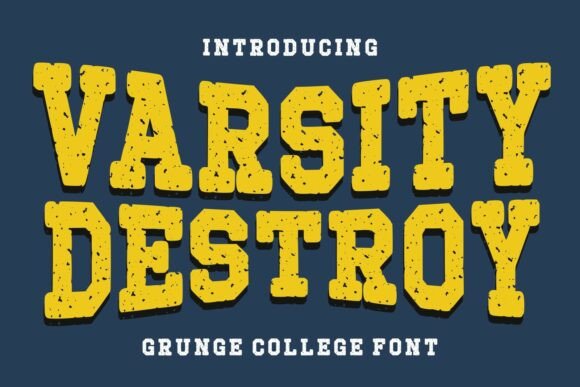
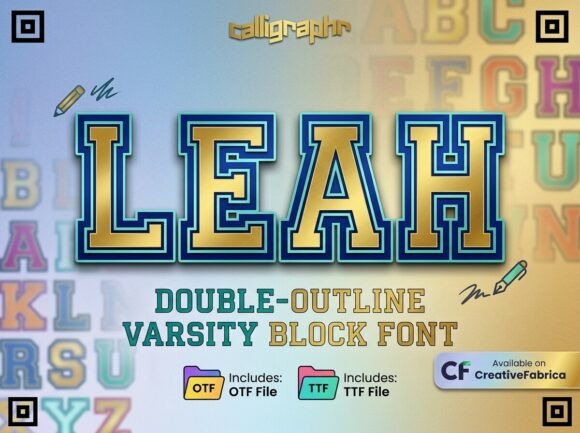
When designing for sports teams, championship events, or high-end spirit wear, the typography you choose carries as much weight as the logo itself. Leah is a heavy-duty varsity block font that has emerged as a definitive choice for designers seeking to balance collegiate tradition with modern luxury. Unlike standard athletic typefaces that often feel flat or overly aggressive, Leah commands the field with a sophisticated double-outline structure and a premium gold-metallic gradient. This combination redefines athletic prestige, making it a premier option for varsity jackets, team branding, and commemorative graphics.
However, possessing a premium asset like Leah does not automatically guarantee a premium result. Many creators, from freelance designers to small business owners producing local team gear, underestimate the technical and aesthetic nuances required to use this typeface effectively. The difference between a generic gym shirt and a high-value piece of merchandise often lies in avoiding common application errors. Understanding how to properly leverage Leah’s unique features ensures your final product communicates quality rather than clutter.
Understanding the Double-Outline Advantage
The most distinct feature of Leah is its built-in double-outline structure. A frequent mistake occurs when designers treat this font like a standard single-layer typeface. If you attempt to manually add strokes or outlines in your vector software without accounting for Leah’s existing geometry, you risk creating muddy intersections and uneven spacing. This is particularly problematic when scaling down for social media graphics or embroidery digitizing files.
To avoid this, always inspect the glyph paths before applying additional effects. Leah’s double outline is engineered to provide depth without requiring excessive manual manipulation. When you need to change colors, utilize the separate path layers intended for the inner and outer strokes rather than applying a blanket fill. This preserves the crisp definition that gives the font its varsity authenticity. For those new to working with multi-layered display fonts, taking five minutes to understand the layer hierarchy can save hours of cleanup time later.
Navigating Metallic Gradients in Production
Leah features a stunning gold-metallic gradient that evokes trophy cases and championship rings. While visually striking on screen, this element requires careful handling during production. A common oversight is assuming the digital gradient will translate directly to print or fabric without adjustment. Screen printing, heat transfer vinyl, and embroidery all interpret gradients differently. Sending a file with a complex rasterized gold gradient to a screen printer often results in banding or color shifts that diminish the luxurious feel.
For physical merchandise, consider separating the gradient into spot colors or using specialized metallic inks and foils. If you are using Leah for varsity jackets, consult with your manufacturer about chenille patch capabilities. The font’s bold weight supports dense stitching beautifully, but the gradient may need to be simplified into two or three solid thread colors to maintain legibility and texture. Digital projects have more flexibility, but ensure your color profile is set correctly; a gold that looks rich in RGB can appear muddy in CMYK if not converted with care.
Balancing Tradition with Modern Legibility
Varsity fonts are inherently nostalgic, but nostalgia should not come at the expense of communication. One of the most significant pitfalls when using Leah is prioritizing style over readability in secondary text. Because Leah is a heavy display font, it demands space. Cramming it into tight layouts or pairing it with other ornate typefaces creates visual competition that confuses the viewer.
A better approach is to let Leah serve as the undisputed anchor of your design. Pair it with clean, geometric sans-serifs or simple slab serifs for subheads and body copy. This contrast highlights Leah’s premium nature while ensuring essential information—like game dates, player names, or sponsor details—remains instantly readable. Remember that athletic branding serves a functional purpose; fans need to identify their team from a distance. If the decorative elements obscure the message, the design has failed regardless of how stylish the font appears.
Licensing and Commercial Viability
For entrepreneurs and freelancers, overlooking licensing terms is a costly error. Leah is a specialized commercial asset, and its usage rights may differ from free or open-source varsity fonts found online. Before incorporating Leah into client work or products for sale, verify the specific license tier you have purchased. Some licenses cover personal projects but require upgrades for merchandise sold for profit or large-scale corporate branding.
This due diligence protects both you and your clients. Using an improperly licensed font in a commercial campaign can lead to legal complications and reputational damage. Furthermore, purchasing the correct commercial license often grants access to updated files, alternate characters, and technical support. Viewing the license fee as an investment in professional security rather than an arbitrary cost helps frame the value proposition correctly for budget-conscious stakeholders.
Technical Preparation for Diverse Media
Versatility is key for any athletic brand system. Leah performs exceptionally well across various media, but only if the source files are prepared correctly. Designers sometimes export low-resolution PNGs or flattened JPEGs for production partners, assuming the bold shapes will hold up. This is rarely the case. The sharp corners and precise curves of Leah’s double outline require vector data to remain crisp at any size.
- Vector Integrity: Always supply AI, EPS, or SVG files for print and cut applications. Outline the text to prevent font substitution issues, but keep a live-text backup layer for future edits.
- Kerning Adjustments: Varsity block fonts often have default spacing optimized for uppercase lockups. When using mixed case or specific letter combinations, manual kerning is usually necessary to prevent awkward gaps or collisions.
- Contrast Testing: Test your color combinations against various backgrounds. The gold gradient needs sufficient contrast to pop; placing it on a mid-tone yellow or beige background will cause it to disappear.
Evaluating Fit for Your Specific Project
While Leah is a powerhouse for athletic prestige, it is not a universal solution. Before committing to this typeface, honestly assess whether its heavy, luxurious personality aligns with your project’s goals. It excels at conveying strength, victory, and established tradition. It may be less suitable for youth recreational leagues aiming for a playful, approachable vibe or for minimalist tech-sports brands where sleekness trumps bulk.
Create mockups in context before finalizing your decision. Seeing Leah applied to a jacket chest, a helmet decal, or a website header provides realistic feedback that specimen sheets cannot offer. Ask yourself if the font enhances the brand story or distracts from it. The goal is to elevate the design, not just to use a beautiful font. When applied with intention and technical precision, Leah transforms ordinary athletic graphics into enduring symbols of excellence. By avoiding common missteps in layering, production, and pairing, you ensure that every application of this typeface truly commands the field.