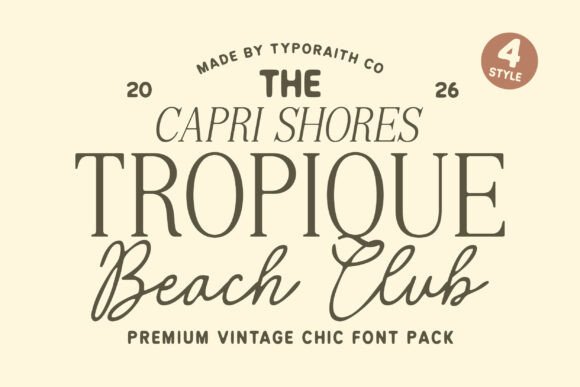
Tropique: Elevating Coastal Design with Vintage Chic Typography
Achieving a truly luxurious coastal aesthetic requires more than just high-resolution photography and a pastel color palette; it demands typography that carries the same weight of sophistication as the imagery itself. Tropique and the accompanying Tropique Beach Club font pack have emerged as essential tools for designers seeking to bridge the gap between retro editorial nostalgia and modern Mediterranean elegance. This collection is not merely a set of letters but a curated system designed to evoke the feeling of a premium beach resort or a high-end fashion magazine from the 1970s. However, possessing such a distinctive typeface does not automatically guarantee professional results. Many creators, from freelance graphic designers to boutique owners, inadvertently undermine the value of this vintage chic asset through misuse or misunderstanding of its intended application.
Understanding the Dual Nature of the Collection
One of the most frequent oversights when working with Tropique is treating the serif and script styles as interchangeable rather than complementary. The collection features four unique styles that serve distinct hierarchical functions. The sophisticated serif characters are engineered for structure, readability, and timeless authority, while the flowing signature scripts provide organic movement and warmth. A common mistake occurs when designers use the script style for body copy or extended informational text in an attempt to maximize the "vintage" feel. This approach severely impacts legibility and creates visual fatigue, particularly on digital screens or smaller print formats like café menus.
To avoid this, you must respect the functional division within the family. Use the Tropique serifs for headlines, subheads, and essential information where clarity is paramount. Reserve the signature scripts strictly for accent elements, logos, short taglines, or decorative flourishes. When these two styles are paired correctly, they create a balanced tension that feels both relaxed and expensive. For example, a wedding invitation suite should utilize the serif for the logistical details—time, date, and location—to ensure guests can read them effortlessly, while employing the script solely for the couple’s names or a brief welcome sentiment. This restraint is what separates amateur designs from professional, high-end branding.
The Pitfall of Over-Styling and Excessive Tracking
Vintage typography often tempts users to apply heavy stylistic treatments, assuming that more modification equals more character. With Tropique, excessive letter spacing (tracking) or aggressive warping can destroy the carefully crafted kerning and flow of the glyphs. While wide tracking is a hallmark of luxury editorial design, applying it indiscriminately to the script variations breaks the natural connections between letters, making the handwriting look disjointed and artificial. Similarly, stretching or condensing the serif weights distorts the stroke contrast that gives the font its premium appearance.
Instead of relying on software transformations, trust the original design metrics. If you need wider spacing for a headline, apply it sparingly to the uppercase serif characters only. For the script, maintain the default spacing unless you are manually adjusting specific ligatures for a custom logo lockup. Remember that true luxury lies in subtlety. The goal is to make the typography feel effortless, not forced. If your design looks strained or difficult to parse, you have likely over-processed the type. Step back and allow the inherent elegance of Tropique to do the heavy lifting without unnecessary digital manipulation.
Evaluating Context and Brand Alignment
Before purchasing or deploying Tropique, it is vital to assess whether your project genuinely aligns with its specific aesthetic niche. Not every coastal or summer-themed project benefits from vintage chic typography. A modern tech startup focused on marine biology or a minimalist architectural firm may find that Tropique’s retro warmth clashes with their need for clinical precision or futuristic innovation. Misalignment here leads to mixed messaging, where the visual tone contradicts the brand's core values, confusing potential clients or customers.
Conduct a thorough audit of your existing visual assets before integration. Tropique thrives in environments characterized by texture, film grain, warm lighting, and tactile materials. It pairs exceptionally well with linen paper stocks, muted earth tones, and analog photography. If your brand relies heavily on neon colors, sharp geometric vectors, or glossy synthetic aesthetics, this font pack may create dissonance rather than harmony. Test the typeface against your actual content first. Create mockups using real copy and images rather than placeholder text. This practical evaluation helps determine if the font enhances your narrative or merely acts as a trendy overlay that will date your work prematurely.
Licensing and Commercial Viability
A critical yet often overlooked aspect of selecting premium typography is understanding licensing limitations. Enthusiasm for a font’s beauty can sometimes overshadow the legal and practical requirements of commercial use. Beginners and small business owners frequently assume that a personal license covers all social media templates or product packaging, leading to compliance issues later. Always verify the specific license tier required for your intended use case. If you are designing merchandise for sale, creating client branding packages, or developing monetized digital assets, a commercial or extended license is typically necessary.
Beyond legality, consider the technical compatibility of the file formats provided. Ensure the Tropique files include OpenType features if you plan to utilize alternate characters or ligatures extensively. Some older design software or web platforms may not support advanced typographic features, rendering the font less versatile than anticipated. Checking technical specifications beforehand prevents workflow bottlenecks and ensures that the investment yields usable results across all intended mediums, from Instagram stories to printed wine labels.
Maintaining Hierarchy in Marketing Materials
Even when used appropriately, Tropique can fail if it is not supported by a robust typographic hierarchy. In marketing materials like beauty product packaging or restaurant menus, there is a tendency to let the display font dominate at the expense of functional communication. While Tropique sets the mood, it cannot carry every layer of information. Relying solely on this font pack for an entire layout often results in a monotonous visual rhythm where nothing stands out because everything is equally stylized.
The solution is strategic pairing. Complement Tropique with a clean, neutral sans-serif or a simple geometric typeface for fine print, ingredients lists, and secondary information. This contrast amplifies the impact of the vintage chic elements by providing negative space and visual rest. Think of Tropique as the lead vocalist and the supporting typeface as the rhythm section; both are necessary for a complete performance. By establishing clear size, weight, and style distinctions, you guide the viewer’s eye naturally through the content, ensuring that the aesthetic appeal never compromises the utility of the design.
Ultimately, Tropique and Tropique Beach Club offer a powerful shortcut to achieving a specific, highly desirable look. However, their effectiveness depends entirely on the designer’s discipline. By avoiding common pitfalls regarding legibility, styling, context, and hierarchy, you transform this font pack from a mere decorative element into a foundational pillar of sophisticated brand identity. Approach it with respect for its craftsmanship, and it will reward your projects with a timeless elegance that resonates deeply with audiences seeking authenticity and quality.