Evaluating History Birthday for Elegant Design Projects
Selecting the appropriate typeface is one of the most critical decisions in visual communication, particularly when the design goal involves conveying sophistication, tradition, or personal warmth. History Birthday has emerged as a notable option within the script font category, characterized by its stylish and elegant aesthetic. For designers, event planners, and individuals creating personal stationery, understanding the specific attributes of this typeface is essential for determining its suitability. This evaluation explores the functional and aesthetic dimensions of History Birthday to assist in making an informed typographic choice.
Defining the Aesthetic Profile
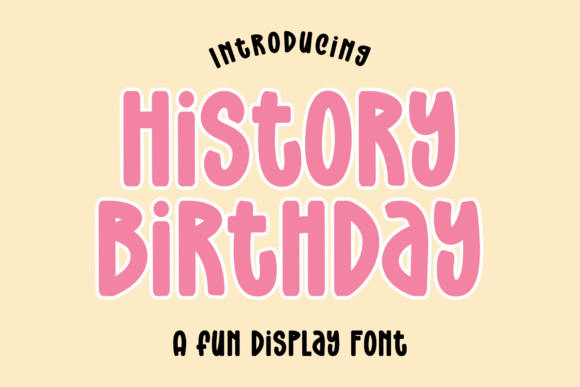
History Birthday is classified as a script typeface that emulates high-end calligraphy. Unlike casual handwriting fonts that mimic quick notes or informal scribbles, this font is structured to resemble formal copperplate or modern brush scripting. The letterforms feature significant stroke contrast, with thick downstrokes and hairline upstrokes, creating a rhythmic visual flow. The connections between letters are generally fluid, designed to maintain a continuous line that suggests movement and grace.
The primary visual identity of History Birthday is rooted in elegance. It avoids the geometric rigidity of sans-serif fonts and the heavy serifs of traditional roman typefaces. Instead, it occupies a space reserved for ceremonial and expressive communication. When evaluating this font, it is important to recognize that it is inherently decorative. Its design intent is not utility or rapid information consumption, but rather emotional resonance and aesthetic enhancement.
Ideal Applications and Use Cases
The versatility of History Birthday allows it to function across various mediums, provided the context aligns with its formal nature. Based on its design characteristics, it performs best in specific scenarios where a handwritten touch adds value without sacrificing legibility.
- Wedding Stationery: This is perhaps the most common application. The font’s romantic and timeless quality makes it suitable for invitation suites, save-the-dates, and place cards. It pairs effectively with minimalist layouts where the typography serves as the primary decorative element.
- Formal Correspondence: For thank you cards, anniversary announcements, and holiday greetings, History Birthday conveys sincerity and effort. In an era of digital communication, a printed piece using this typeface signals a higher level of personal attention.
- Branding and Logos: Boutique businesses, particularly in the beauty, fashion, and artisanal food sectors, often utilize this style of script to suggest craftsmanship and luxury. It works well for wordmarks where the brand name needs to feel bespoke rather than corporate.
- Social Media Graphics: When used for quotes or overlays on photography, the font provides a distinct focal point. However, this requires careful background selection to ensure sufficient contrast.
Benefits of Choosing History Birthday
There are distinct advantages to incorporating this typeface into a design system. Understanding these benefits helps justify the selection over other available scripts.
Emotional Connection: Typography carries psychological weight. History Birthday triggers associations with tradition, celebration, and intimacy. For projects requiring an emotional hook, this font performs better than neutral typefaces because it mimics the human hand, fostering a sense of connection between the sender and the recipient.
Visual Hierarchy: Due to its ornate nature, History Birthday naturally commands attention. It functions exceptionally well as a display font for headlines or names. This inherent visual weight simplifies layout decisions, as the font itself establishes the hierarchy without needing excessive sizing or color manipulation.
Timelessness: While some script fonts lean heavily into current trends that may date a design quickly, History Birthday draws on classical calligraphic principles. This makes it a safer long-term investment for branding or keepsake items like wedding albums that are intended to remain aesthetically pleasing for decades.
Tradeoffs and Practical Considerations
No typeface is universally perfect, and History Birthday presents specific challenges that must be weighed against its benefits. An objective evaluation requires acknowledging where the font may underperform.
Legibility at Small Sizes: The intricate details and thin hairlines that define the font’s elegance become liabilities at small point sizes. On business cards or fine print sections of invitations, the strokes may disappear during printing or become difficult to read on low-resolution screens. It is rarely suitable for body text or dense paragraphs.
All-Caps Usage: Like most connecting scripts, History Birthday is generally not designed to be set in all capital letters. Doing so often breaks the natural flow of the connections and creates awkward spacing issues. If a project requires uppercase emphasis for acronyms or legal disclaimers, a secondary pairing font will be necessary.
Background Sensitivity: The varying stroke width means the font can vibrate or disappear against busy backgrounds. High-contrast, solid backgrounds are usually required for optimal readability. Using this font over complex photographic textures often necessitates adding drop shadows or solid backing shapes, which can alter the intended delicate aesthetic.
When to Consider Alternatives
While History Birthday is a strong contender for elegant scripting, it is not the correct solution for every project. Evaluators should consider alternative typefaces in the following situations:
- High-Information Density: If the design involves menus, schedules, or instruction manuals, a clean serif or sans-serif is superior. Script fonts slow down reading speed significantly.
- Modern or Tech-Forward Branding: For technology companies, startups, or brands aiming for a futuristic or industrial vibe, the traditional elegance of History Birthday may send conflicting signals. Geometric sans-serifs or monospaced fonts are typically more aligned with these identities.
- Casual or Playful Contexts: Children’s products, informal party invites, or humorous content may find History Birthday too serious or stiff. Rounded hand-lettering fonts or marker-style scripts offer a more relaxed tone.
- Accessibility Requirements: For public signage or digital interfaces requiring WCAG compliance, decorative scripts often fail accessibility standards due to character recognition difficulties for users with visual impairments or dyslexia.
Decision-Making Framework
Determining whether History Birthday aligns with your specific goals involves a practical assessment of the project parameters. Before licensing or implementing the font, consider testing it against three criteria: context, medium, and pairing potential.
First, assess the contextual tone. Does the message require formality and grace? If the answer is yes, History Birthday is likely a fit. If the message is urgent, technical, or casual, look elsewhere. Second, evaluate the output medium. Test the font at the actual size it will be printed or displayed. Verify that the thinnest strokes remain visible and that the overall texture remains balanced. Finally, plan your typographic pairing. History Birthday requires a supportive partner font for secondary information. Ensure you have selected a complementary serif or sans-serif that balances the script’s ornamentation without competing for attention.
Ultimately, History Birthday serves as a specialized tool for designers seeking to elevate the perceived value and emotional impact of their work. By understanding both its elegant capabilities and its functional limitations, users can deploy it effectively to create designs that are both beautiful and purposeful. The decision to use this typeface should always stem from a clear alignment between the font’s inherent characteristics and the communicative goals of the project.