Vinyl Player: A Practical Evaluation of Retro Display Typography
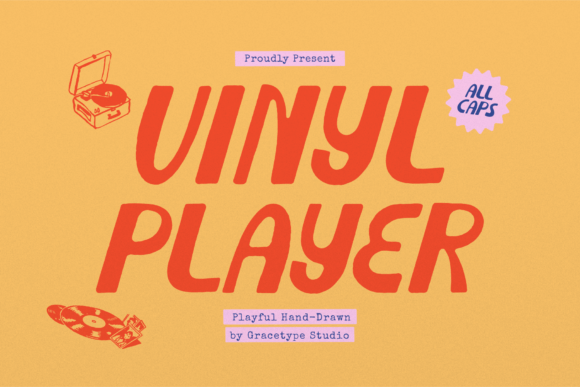
In the current landscape of graphic design, the resurgence of analog aesthetics has moved beyond fleeting trends to become a stable pillar of visual communication. For designers and brand strategists seeking to evoke authenticity without resorting to cliché, Vinyl Player offers a distinct solution. This all-caps display typeface captures a specific era of warmth and tactile nostalgia, bridging the gap between vintage record shop signage and contemporary indie branding. Unlike many retro revivals that rely on digital perfection or excessive distressing, Vinyl Player succeeds through its structural imperfections and rhythmic, hand-drawn curves.
Evaluating this typeface requires looking past its initial novelty to understand its functional utility in professional workflows. It is not merely a decorative element; it is a strategic tool for establishing tone. With its chunky weight and approachable personality, Vinyl Player serves as a high-impact asset for independent music festivals, boutique hospitality brands, and retro-themed merchandise. However, its unique characteristics also demand careful application. Understanding where this font excels—and where it falls short—is essential for maximizing its value in commercial and creative projects.
Defining Characteristics and Structural Integrity
The primary appeal of Vinyl Player lies in its deliberate rejection of geometric rigidity. While many modern sans-serifs prioritize mathematical alignment, this typeface embraces a slightly off-kilter slant and irregular baseline. These features are not random errors but calculated design choices that mimic the organic nature of hand-painted lettering found on mid-century album covers and concert posters. The heavy, casual letterforms possess a structural weight that commands attention without feeling aggressive or imposing.
From a technical standpoint, the font maintains remarkable consistency despite its hand-drawn appearance. Each glyph shares a cohesive stroke width and curvature logic, ensuring that headlines do not appear disjointed when set at large sizes. This balance between "groovy" expression and typographic stability is what separates Vinyl Player from lower-quality novelty fonts. The curves feel rhythmic rather than chaotic, allowing the eye to move across the text smoothly even when the letters themselves defy standard vertical axes. This makes it suitable for extended display settings, such as event schedules or menu boards, where readability remains a priority alongside style.
The All-Caps Constraint as a Design Feature
It is important to note that Vinyl Player is an exclusively uppercase typeface. In professional typography, all-caps fonts are often viewed with skepticism due to accessibility concerns and reduced legibility in long-form text. However, within the context of this specific design, the lack of lowercase characters is a strength rather than a limitation. The uniform height creates a solid, block-like texture that functions almost as a graphical shape. This solidity reinforces the retro warmth and provides a stable anchor for layouts that might otherwise feel too loose or whimsical. Designers should treat Vinyl Player as a headline and titling instrument, pairing it with highly legible sans-serif or monospaced body copy to maintain hierarchy and accessibility compliance.
Practical Applications and Industry Fit
Vinyl Player performs best when aligned with audiences that value craftsmanship, nostalgia, and independent culture. Its aesthetic signals are specific, making it highly effective for niche markets while potentially unsuitable for corporate or clinical environments. Based on real-world usage patterns, the following sectors derive the most tangible benefit from this typeface:
- Independent Music and Festivals: The font’s lineage is directly tied to vinyl culture. It works exceptionally well for gig posters, album art, and festival wayfinding, instantly communicating genre and atmosphere without relying on photographic imagery.
- Boutique Hospitality: Coffee shops, craft breweries, and vinyl bars utilize Vinyl Player to reinforce a curated, artisanal experience. The typeface suggests a space that is relaxed yet intentional, supporting premium pricing through perceived authenticity.
- Retro Merchandise and Apparel: On t-shirts, tote bags, and packaging, the chunky weight of the letterforms ensures visibility from a distance. The hand-drawn quality translates well to screen printing and embroidery, retaining its character across different production methods.
- Social Media Branding: For content creators and influencers in the lifestyle, music, or vintage niches, Vinyl Player provides immediate recognition in thumbnails and headers. Its bold presence stops the scroll more effectively than thinner, trendier scripts.
Evaluating Usability and Workflow Integration
For freelancers and agency designers, the practical value of a typeface extends beyond aesthetics to include usability and flexibility. Vinyl Player demonstrates strong performance in several key areas of production. The vector construction is generally clean, minimizing the need for node cleanup before sending files to print vendors. This reliability reduces prepress friction, a critical factor when working with tight deadlines for event collateral or product packaging.
However, the font’s eccentricities require mindful typesetting. Because of the slight slants and varying widths, automatic tracking (letter-spacing) adjustments are often necessary. Tight tracking can cause the heavy curves to collide, creating visual mud, while excessive tracking can break the rhythmic flow that defines the typeface’s charm. Experienced designers will find themselves manually adjusting kerning pairs to achieve optimal optical balance. This extra step is a worthwhile investment for high-stakes deliverables but may be a consideration for rapid-turnaround social media templates where speed is paramount.
Pairing Strategies for Balanced Layouts
To leverage Vinyl Player effectively, it must be supported by complementary typography. Its strong personality means it rarely plays well with other display faces or ornate scripts. The most successful pairings involve neutral, structured counterparts that provide breathing room. Grotesque sans-serifs like Helvetica Now or Inter offer a modern counterpoint that grounds the retro vibe in the present day. Alternatively, monospaced fonts like Space Mono or Roboto Mono enhance the zine-like, DIY aesthetic associated with indie music culture. Avoid pairing Vinyl Player with serifs that have similar vintage connotations, as this can push the design into caricature territory rather than sophisticated nostalgia.
Limitations and Considerations for Professional Use
While Vinyl Player is a robust asset for specific contexts, objective evaluation requires acknowledging its boundaries. The typeface is inherently informal. It lacks the authority required for financial institutions, legal services, healthcare providers, or luxury fashion houses seeking minimalist elegance. Using it in these sectors would likely create cognitive dissonance for the target audience, undermining trust rather than building it.
Accessibility is another crucial consideration. As an all-caps display font, Vinyl Player should never be used for body text, navigation menus, or essential informational content. Screen readers interpret all-caps text differently, and users with dyslexia or low vision often struggle with uppercase blocks. Responsible use dictates that Vinyl Player remains strictly decorative or titular, with all critical information duplicated or presented in accessible formats. Furthermore, because the style is currently trending, there is a risk of market saturation in certain niches. Brands aiming for timeless longevity should use Vinyl Player as part of a broader system that can evolve, rather than as the sole identifier of their visual identity.
Long-Term Value and Licensing
When investing in typeface licensing, professionals must consider longevity. Vinyl Player avoids the trap of being overly tied to a specific micro-trend by rooting itself in decades of music history. This historical foundation suggests it will age better than fonts based purely on current internet aesthetics. For small business owners and creators, this means the asset is less likely to require replacement during annual rebrands.
From a return-on-investment perspective, the font’s versatility across digital and physical touchpoints enhances its value. A single license can cover Instagram stories, website headers, physical signage, and printed merchandise, providing consistent branding across channels. For agencies managing multiple clients in the lifestyle and entertainment sectors, owning a reliable, high-quality retro display face reduces the time spent sourcing and vetting new fonts for every project. Ultimately, Vinyl Player earns its place in a professional toolkit not just because it looks good, but because it solves specific communication problems with efficiency, warmth, and distinct character.