Evaluating Champion Geometric Typeface for Athletic and Display Design
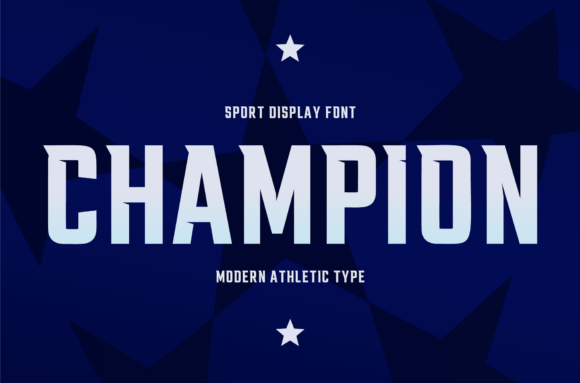
In the specialized field of sports graphics and athletic branding, typography serves a function far beyond simple legibility. It must convey motion, strength, and institutional authority instantly. The Champion Geometric Typeface addresses this specific niche as a bold, condensed display font engineered for high-impact visual communication. Built explicitly for football graphics, team identities, and competition media, this typeface offers a distinct alternative to generic sans-serifs that often lack the necessary aggression or structural discipline required for stadium environments and broadcast overlays.
For designers, marketers, and content creators working within the sports vertical, selecting the right tool is a matter of workflow efficiency and brand consistency. Champion distinguishes itself through tall, narrow proportions and sharp geometric cuts that maximize space without sacrificing readability. Whether utilized for match-day posters, jersey numbering, or digital signage, understanding the practical capabilities and limitations of this typeface is essential for determining its fit within a professional design arsenal.
Structural Characteristics and Visual Mechanics
The primary value proposition of Champion lies in its condensed geometry. Unlike standard width fonts that require significant horizontal tracking adjustments to achieve a "sporty" look, Champion is natively designed with verticality in mind. This architectural choice allows designers to set large, commanding headlines in tight spaces—a common constraint in social media templates, mobile app interfaces, and physical merchandise where vertical real estate is premium but horizontal space is limited.
The letterforms feature sharp, decisive angles rather than soft curves. This geometric rigidity contributes to a sense of precision and modernity. In practice, this means the font performs exceptionally well at large sizes where details remain crisp. However, it also dictates the font’s ceiling; the sharp terminals and heavy stroke weight make it unsuitable for body copy or extended reading. It is strictly a display workhorse. The inclusion of two distinct stylistic variations enhances its utility:
- Upright Style: Provides stability and authority. Best suited for official announcements, scoreboards, static logos, and institutional headers where confidence and permanence are the primary messages.
- 12° Slanted Style: Introduces kinetic energy without the distortion artifacts sometimes caused by applying artificial italicization in design software. This variant is ideal for action shots, player statistics, promotional teasers, and any context implying speed or forward momentum.
Having both styles available as native font files rather than relying on algorithmic slanting ensures that stroke weights remain consistent and counters do not collapse when the dynamic version is deployed. This attention to typographic integrity is a marker of quality that professionals should prioritize over cheaper, less rigorous alternatives.
Practical Applications in Sports Branding
Champion Geometric Typeface was built with specific use cases in mind, and its performance varies depending on the application. Evaluating its effectiveness requires looking at real-world deployment scenarios rather than isolated specimen sheets.
Jersey Numbers and Player Identification
Legibility at a distance is the non-negotiable metric for athletic apparel. Champion’s condensed structure allows for larger numerals within the confined print area of a jersey back or sleeve. The open counters and uniform stroke width ensure that numbers remain distinguishable even when fabric folds or players are in motion. For teams designing new kits or updating legacy branding, this font provides a clean, professional aesthetic that aligns with modern league standards while maintaining functional clarity for officials and fans.
Match-Day Graphics and Social Media
Digital content creators face the challenge of capturing attention in fractions of a second. Champion’s heavy weight and tall aspect ratio create immediate visual hierarchy. When overlaying text on busy photography, the font’s density helps it stand out against complex backgrounds without requiring excessive drop shadows or outlines that can clutter the composition. The 12° slant pairs particularly well with diagonal layout elements and motion blur effects commonly used in highlight reels and game previews.
Stadium Signage and Environmental Graphics
Wayfinding and informational signage demand high x-heights and clear differentiation between characters. While Champion is primarily a display face, its uppercase set possesses sufficient distinction for directional signage in arenas and stadiums. The geometric construction scales effectively to large-format printing, maintaining edge sharpness on vinyl, metal, and LED displays. However, designers should test lowercase readability extensively if considering it for multi-line environmental text, as condensed geometries can sometimes cause character crowding at smaller physical scales.
Workflow Integration and Technical Considerations
Beyond aesthetics, the usability of a typeface determines its long-term value. Champion integrates smoothly into standard design workflows, but there are technical nuances to consider for optimal results.
Kerning and Spacing: Condensed fonts often require tighter tracking than their wider counterparts to appear cohesive. Champion comes with built-in metrics that generally work well out of the box, but manual adjustment may be necessary for all-caps headlines. Designers should avoid default spacing settings and instead optically adjust kerning pairs, particularly around angular characters like A, V, W, and Y, to prevent awkward gaps that undermine the solid block appearance essential to the sport aesthetic.
Hierarchy Management: Because Champion is inherently loud, it dominates any layout it inhabits. Successful implementation requires pairing it with a neutral, highly readable sans-serif for supporting information. Attempting to use Champion for subheads, captions, or metadata typically results in visual fatigue and reduced comprehension. Reserve this typeface for the top tier of your typographic hierarchy—titles, scores, names, and key calls to action—and let secondary fonts handle the narrative load.
Cross-Platform Consistency: For agencies managing brands across multiple touchpoints, verifying rendering consistency is crucial. Test Champion across web browsers, video editing software, and print RIPs to ensure the geometric precision holds up. Some rendering engines may alias sharp corners differently at screen resolution compared to print output. Establishing style guides that specify exact point sizes, tracking values, and color treatments helps maintain brand coherence whether the asset appears on a smartphone screen or a jumbotron.
Audience Fit and Strategic Value
Not every project warrants a specialized display font. Champion Geometric Typeface delivers maximum return for specific user profiles and objectives.
Ideal Users:
- Sports marketing agencies and freelance designers specializing in athletic clients.
- Team equipment managers and brand directors overseeing visual identity systems.
- Broadcast designers creating lower thirds, score bugs, and transition graphics.
- Merchandise designers producing fan gear, event programs, and commemorative prints.
- Content creators focused on football, soccer, basketball, and motorsport niches.
Less Suitable Contexts:
Projects requiring extensive body text, editorial layouts, luxury branding, or organic/humanist aesthetics will find Champion counterproductive. Its assertive personality conflicts with subtle, elegant, or traditional design languages. Additionally, organizations seeking a single-font solution for all communications should look elsewhere; Champion is a specialist tool, not a universal system.
Assessing Long-Term Utility
Trends in sports design cycle rapidly, but certain principles endure. Bold, condensed geometries have remained relevant in athletic typography for decades because they solve fundamental problems: visibility, impact, and space efficiency. Champion executes these fundamentals competently without relying on gimmicks that date quickly. Its clean lines and proportional balance suggest longevity beyond seasonal trend cycles.
When evaluating licensing and investment, consider the frequency of high-impact deliverables in your workflow. If you produce weekly match graphics, seasonal kit designs, or regular video content, the time saved by having a purpose-built font outweighs the cost of acquisition. Conversely, for one-off projects or infrequent needs, a broader library subscription might offer better economics.
Ultimately, Champion Geometric Typeface succeeds because it understands its assignment. It does not attempt to be everything to everyone. Instead, it offers a refined, reliable solution for designers who need to communicate power and motion with typographic precision. For professionals operating in the competitive visual landscape of modern sports, it represents a credible, functional asset worthy of consideration in the next brand refresh or campaign rollout. The decision to adopt should hinge on alignment with specific project requirements and audience expectations rather than novelty alone. When those conditions align, Champion delivers exactly what it promises: confident, energetic typography built for the demands of contemporary athletic presentation.