Edume: Strategic Application of Decorative Display Typography
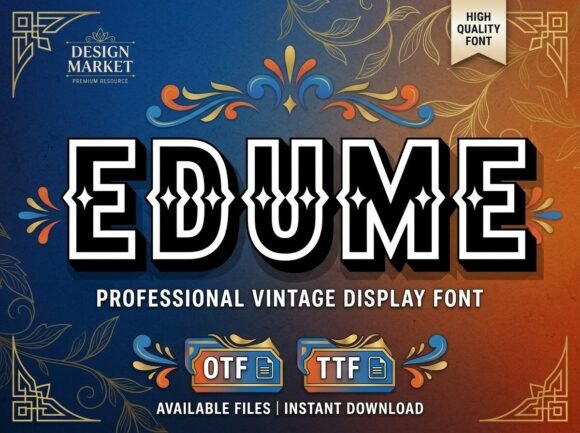
In the competitive landscape of visual communication, typography is rarely just about legibility; it is a primary vehicle for brand positioning and emotional resonance. Edume serves as a specialized tool within this ecosystem, functioning not as a utility typeface but as a strategic asset for high-impact visual anchoring. Designed as a stunning decorative display font, Edume is engineered to command attention through unique artistic elements and a strong visual personality. For entrepreneurs, marketers, and creative directors, understanding the specific utility of this typeface is essential for integrating it effectively into branding, packaging, and digital campaigns without compromising professional polish.
The decision to utilize a display typeface like Edume should be rooted in clear communication goals rather than aesthetic preference alone. When applied correctly, it differentiates a brand from competitors relying on standard sans-serif or serif libraries. However, its distinctive nature requires a disciplined approach to hierarchy and layout. This article explores the strategic implementation of Edume, focusing on how to leverage its bold characteristics for tangible business outcomes while navigating its technical constraints to maintain operational efficiency and design integrity.
Defining the Role of Edume in Visual Hierarchy
Edume is categorized as an all-caps uppercase-only display typeface. This technical specification is not merely a stylistic choice but a functional constraint that dictates its role in any design system. Unlike body copy fonts designed for sustained reading, Edume is built for immediate recognition and short-form engagement. Its value lies in its ability to act as a visual hook, guiding the viewer’s eye to the most critical information first. In marketing collateral, this means Edume should be reserved exclusively for headlines, logos, subheads, and call-to-action buttons where brevity and impact are paramount.
Strategically, this limitation forces better content planning. Because Edume does not include lowercase letters, designers cannot rely on it for paragraph text or lengthy explanations. This necessitates a clear separation between "voice" (body copy) and "tone" (display headers). By restricting Edume to high-value real estate, you ensure that every instance of its use carries weight. Overusing such a distinct typeface dilutes its power and creates visual fatigue. Therefore, successful integration begins with auditing your current design assets to identify exactly where a stronger visual anchor is needed to improve conversion rates or brand recall.
Aligning Typography with Brand Positioning
For small business owners and freelancers, selecting Edume signals a departure from corporate minimalism toward a more expressive, artisanal, or luxury aesthetic. The font’s artistic elements suggest craftsmanship and intentionality, making it particularly effective for industries where perceived value is tied to creativity and uniqueness. If your brand positioning relies on being approachable yet sophisticated, or bold yet refined, Edume provides the typographic texture necessary to communicate those attributes instantly.
However, alignment requires testing. Before committing to Edume as a primary brand element, evaluate whether its personality supports your long-term messaging. A financial consultancy might find the decorative nature too informal, whereas a boutique hotel or craft beverage brand would benefit from its ornate structure. Conduct A/B testing on social media graphics or landing page headers to measure audience response. Does the typeface increase time-on-page or click-through rates? Data-driven validation ensures that the choice of Edume supports business objectives rather than serving as mere decoration.
Practical Applications Across Business Functions
Versatility is a key claim for Edume, but practical application requires context-specific adaptation. The font performs exceptionally well across several high-stakes touchpoints where first impressions determine success. Understanding these use cases helps professionals deploy the asset where it yields the highest return on investment.
- Bold Headlines and Digital Advertising: In paid media, stopping the scroll is the primary metric of success. Edume’s heavy visual weight and unique letterforms create contrast against clean platform interfaces, increasing ad visibility.
- Artistic Logos and Wordmarks: For startups avoiding expensive custom lettering commissions, Edume offers a foundational structure that feels bespoke. Its decorative details reduce the need for additional iconography, allowing the name itself to serve as the logo.
- Creative Packaging and Label Design: On physical shelves, readability at a distance competes with shelf appeal. Edume balances both by offering distinct silhouettes that remain legible while conveying premium quality through intricate detailing.
- Event Collateral and Signage: For weddings, conferences, or pop-up retail, the all-caps nature of Edume lends itself to monumental typography that transforms environmental graphics into immersive experiences.
In each scenario, the common thread is brevity. Edume excels when the message is distilled to its essence. Creators should pair it with highly readable neutral typefaces for supporting text to create a balanced composition that guides the user journey from attraction to comprehension.
Technical Considerations and File Management
Operational friction often arises from poor file management or software incompatibility. Edume is delivered with both OTF (OpenType Font) and TTF (TrueType Font) formats, each serving distinct professional needs. Understanding the difference prevents workflow bottlenecks and ensures consistent rendering across devices.
The OTF file is the industry standard for advanced design and layout software such as Adobe Illustrator, InDesign, and Affinity Designer. OpenType format supports advanced typographic features and typically renders more accurately in print production environments. Professional designers should prioritize this format for logo creation, packaging design, and high-resolution print collateral to ensure precise kerning and glyph access.
The TTF file offers universal compatibility and is essential for broader team collaboration. It functions reliably across Microsoft Office applications, basic graphic tools like Canva, and web environments. For marketers creating internal presentations, social media managers working in browser-based tools, or educators preparing course materials, the TTF version ensures that the Edume aesthetic remains accessible without requiring specialized software licenses. Maintaining organized records of both files ensures that your brand assets remain portable and resilient as your tech stack evolves.
Mitigating Risks in Decorative Typography
While Edume is a powerful asset, misuse can undermine professionalism and accessibility. The most significant risk stems from ignoring the "uppercase only" constraint. Attempting to force lowercase styling or using the font for extended passages results in poor readability and a chaotic visual experience. This violates core usability principles and can alienate audiences who struggle with all-caps text blocks. Always adhere to the intended use case: short, impactful statements.
Accessibility is another critical consideration. Decorative fonts often have lower contrast ratios or complex shapes that challenge screen readers and users with visual impairments. When using Edume in digital environments, always provide alt text for images containing the font and ensure sufficient color contrast against backgrounds. Never use Edume for functional UI elements like navigation menus or form labels where clarity trumps style. Responsible design practices protect your brand reputation and ensure compliance with digital accessibility standards.
Long-Term Value and Asset Longevity
Trends in typography shift rapidly, but strategically chosen display fonts can retain relevance through intentional application. To maximize the long-term value of Edume, treat it as a modular component of your design system rather than a permanent fixture. Create templates that allow for easy swapping if market preferences evolve, but establish guidelines that preserve the core identity Edume helps build. Document usage rules in your brand style guide to prevent inconsistent application as teams scale or external vendors are onboarded.
Furthermore, consider the licensing implications for commercial use. Ensuring you have the appropriate rights for your specific applications—whether digital, print, or merchandise—protects your business from legal exposure. Investing time in proper licensing and documentation upfront prevents costly rebranding efforts later. When managed as a strategic asset rather than a disposable trend, Edume contributes to a cohesive visual language that compounds in value over time, reinforcing brand equity with every consistent application.
Decision Framework for Implementation
Before integrating Edume into your next project, apply this decision framework to validate its suitability:
- Objective Clarity: Is the goal to attract attention or convey detailed information? If the latter, choose a different typeface.
- Audience Resonance: Does the decorative style align with your target demographic’s expectations and preferences?
- Contextual Fit: Will the all-caps format work within the available space and medium constraints?
- Pairing Strategy: Have you selected a complementary body font that maintains readability and balance?
- Technical Readiness: Do you have the correct file format (OTF/TTF) for your specific software environment?
By approaching Edume with strategic intent rather than impulse, creators and professionals can harness its distinctive character to elevate their work. The result is not just beautiful typography, but purposeful design that drives engagement, reinforces brand identity, and delivers measurable results. Remember that in visual communication, restraint is often as important as expression. Use Edume to make a statement, then let silence and whitespace amplify its impact.