Cute Homework: A Guide to Using Kawaii Puffy Stitch Typography
In the vast landscape of digital typography, finding a typeface that balances personality with legibility can be a significant challenge for designers and content creators. While minimalist sans-serifs dominate corporate branding, there is a growing demand for fonts that evoke warmth, nostalgia, and approachability. Cute Homework has emerged as a distinctive solution in this niche, offering a unique blend of handwritten charm and structured readability. This ✨ Cute Homework – Kawaii Puffy Stitch Bubble Font is not merely a decorative element; it is a functional design tool tailored for specific emotional responses and practical applications.
Understanding the nuances of this typeface requires looking beyond its adorable aesthetic. For educators, small business owners, and digital artists, selecting the right font is about communication. The puffy, stitched appearance of Cute Homework serves a psychological purpose, signaling safety, creativity, and youthfulness. This article explores the functional characteristics, ideal use cases, and practical considerations for integrating this kawaii-style typography into professional and personal projects effectively.
The Anatomy of Playful Legibility
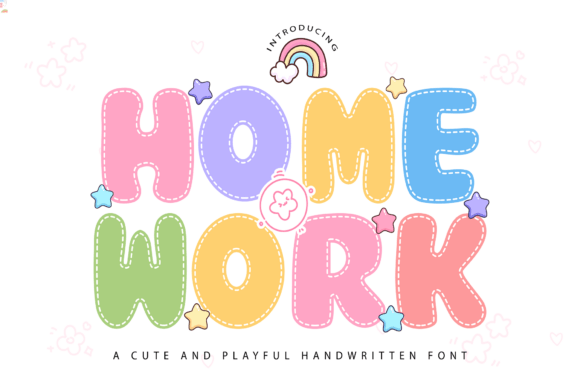
To utilize Cute Homework effectively, one must first understand its construction. Unlike standard bubble fonts that can sometimes appear messy or overly informal, this typeface maintains a consistent baseline and x-height. The letters are rounded and chunky, which inherently increases their visibility at smaller sizes compared to thinner script fonts. The defining feature—the sweet stitched dashed outline—adds texture without sacrificing clarity. This "stitched" effect mimics the tactile sensation of embroidery or patchwork, bridging the gap between digital design and physical craft.
This textural quality is crucial for modern design trends that seek to add depth to flat digital interfaces. When used on screens, the dashed outline creates a subtle contrast against solid backgrounds, preventing the text from blending into colorful backdrops. For print projects, this detail translates beautifully to embossing or foil stamping. The font’s architecture ensures that even when scaled up for large-format printing like banners or wall decals, the letterforms retain their integrity and do not become distorted or pixelated.
Psychological Impact in Educational Design
Typography plays a silent but powerful role in learning environments. For teachers and curriculum developers, the visual tone of a worksheet or classroom sign can influence student engagement. Cute Homework is specifically engineered to reduce anxiety associated with academic tasks. The soft, rounded edges and playful proportions signal to young learners that the content is accessible and safe. This is particularly valuable for early childhood education materials, special education resources, and ESL (English as a Second Language) aids where visual friendliness supports cognitive processing.
However, the utility extends beyond elementary settings. In adult education or creative workshops, this font can serve as an icebreaker, setting a relaxed atmosphere that encourages participation. It strips away the sterility often associated with instructional design, replacing it with a sense of shared creativity. When evaluating fonts for educational products, consider how Cute Homework pairs with instructional imagery. Its inherent style complements hand-drawn doodles, stars, and hearts, creating a cohesive visual language that reinforces positive reinforcement.
Strategic Applications for Branding and Products
While primarily associated with school-themed projects, the versatility of Cute Homework makes it a viable asset for commercial branding targeting specific demographics. Small businesses in the stationery, children’s apparel, and artisanal food sectors can leverage this font to establish an immediate emotional connection with their audience. The key lies in understanding where this typeface adds value versus where it might detract from brand authority.
- Product Packaging: Ideal for stickers, notebook covers, and gift tags where the unboxing experience relies on whimsy and delight.
- Digital Content: Effective for YouTube thumbnails, social media stories, and blog headers aimed at parenting, crafting, or lifestyle niches.
- Event Stationery: Perfect for baby showers, birthday parties, and family reunions where the tone is celebratory and intimate.
- Merchandise: Translates well to t-shirts, tote bags, and mugs due to its bold weight and distinct silhouette.
For business owners, it is essential to treat Cute Homework as an accent rather than a primary corporate typeface. It works best when paired with a clean, neutral sans-serif for body copy. This combination allows the puffy stitch font to act as a highlighter, drawing attention to sale prices, product names, or calls to action without overwhelming the reader. The pastel palettes often associated with this style should be tested for accessibility; ensure that the color contrast between the text and background meets WCAG standards, especially if the font is used for essential information.
Navigating Technical Considerations and Limitations
No single typeface is universally appropriate, and recognizing the limitations of Cute Homework is just as important as appreciating its strengths. Because of its intricate stitched detailing, this font may not render optimally at extremely small sizes. On low-resolution screens or in dense paragraphs, the dashed lines can create visual noise or moiré effects. Therefore, it is strictly a display font. It should never be used for long-form body text, legal disclaimers, or complex data tables. Reserve it for headlines, subheaders, labels, and short phrases where its character can shine without compromising readability.
Additionally, consider the licensing and file formats required for your specific workflow. Whether you are using the font for digital planning apps like GoodNotes or for commercial packaging production, verifying that you have the correct license tier is mandatory. From a technical standpoint, users should also check for OpenType features. Many kawaii fonts include alternate characters, ligatures, or swashes that can enhance the handmade feel. Utilizing these features prevents repetitive letterforms in all-caps settings, maintaining the organic, handwritten illusion that defines the Cute Homework aesthetic.
Evaluating Suitability for Your Project
Before downloading or purchasing, conduct a brief suitability audit. Ask yourself three critical questions to determine if ✨ Cute Homework – Kawaii Puffy Stitch Bubble Font aligns with your project goals:
- Who is the end user? If your audience values precision, luxury, or corporate seriousness, this font may send mixed signals. If they value comfort, creativity, and playfulness, it is likely a strong match.
- What is the medium? Test the font in the actual environment. A mockup on a high-resolution monitor looks different than a printed sticker or a mobile app interface. Ensure the stitched details remain crisp in the final output format.
- Does it support hierarchy? Can you build a complete typographic system around this font? Successful design requires variation. Ensure you have complementary typefaces ready to handle the heavy lifting of information delivery while Cute Homework handles the emotional engagement.
Real-world application reveals that this font excels in hybrid projects. For example, a teacher creating a digital newsletter for parents might use Cute Homework for the greeting and section titles to maintain a friendly rapport, while using a standard serif for the detailed schedule and policy updates. Similarly, a planner enthusiast might use the font for monthly cover pages and habit tracker headers, utilizing the puffy aesthetic to make organization feel less like a chore and more like a creative outlet.
Pairing and Styling Best Practices
To maximize the impact of Cute Homework, styling choices must be intentional. The font carries a lot of visual weight due to its chunky proportions and textured outline. Surrounding it with ample whitespace is necessary to prevent the design from feeling cluttered. When combining with illustrations, opt for line art or flat vector graphics that share similar stroke weights. Heavy, realistic 3D renders may clash with the soft, crafted nature of the typography.
Color selection also dictates the mood. While pastels are the traditional pairing, experimenting with high-contrast neon outlines on dark backgrounds can give the font a modern, retro-pop twist suitable for Gen Z marketing. Conversely, monochromatic cream-on-white styling emphasizes the stitched texture, evoking a vintage, heirloom quality perfect for boutique baby brands. The adaptability of Cute Homework lies in this chameleon-like ability to shift tones based on color and context, provided the core principles of legibility and balance are respected.
Ultimately, typography is a vehicle for meaning. Cute Homework offers a specialized vocabulary for expressing joy, tenderness, and approachability. By understanding its structural qualities, respecting its functional boundaries, and applying it with strategic intent, creators can transform simple text into an immersive emotional experience. Whether designing a classroom worksheet or launching a new product line, this kawaii puffy stitch font provides the authentic, cozy texture that modern audiences crave in an increasingly digital world.