Crayon Sketch: Authentic Textured Display Font
In the crowded landscape of digital typography, finding a typeface that genuinely evokes the tactile sensation of analog media is a rare challenge. Most "handwritten" fonts suffer from being too polished, too uniform, or digitally sterile. Crayon Sketch breaks this mold by offering a display font that prioritizes texture and authentic imperfection over geometric precision. For designers, educators, and content creators targeting family-oriented or nostalgic demographics, this typeface serves as more than just lettering; it is a visual shorthand for creativity, childhood, and approachability.
The primary value of Crayon Sketch lies in its ability to bridge the gap between professional design and handmade warmth. It captures the specific grain and wax buildup associated with physical crayons, translating that analog charm into a scalable vector format. This makes it an essential asset for projects where emotional connection matters as much as legibility.
Defining Characteristics and Visual Texture
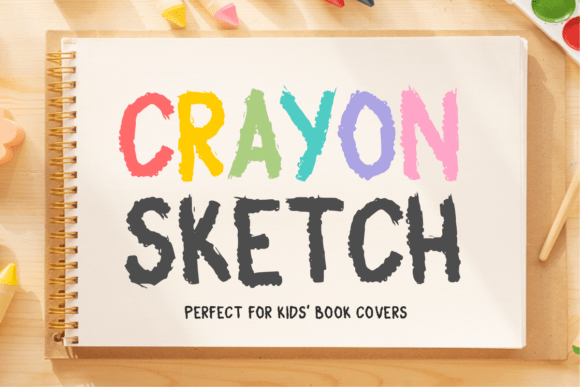
What separates Crayon Sketch from standard marker or brush scripts is its dedication to realistic surface texture. The letterforms are not merely outlined shapes filled with noise; they mimic the actual deposition of wax on paper. You will notice variations in opacity along the strokes, rough edges that suggest hand pressure, and a boldness that remains legible even at smaller display sizes.
The anatomy of the font is intentionally playful without descending into illegibility. The x-height is generous, and the counters are open, ensuring that the heavy texture does not cause the letters to fill in when printed or viewed on lower-resolution screens. This balance is critical for professional use. While the aesthetic is whimsical, the underlying structure respects typographic hierarchy, allowing it to function effectively in headlines, titles, and short bursts of copy without exhausting the reader’s eye.
Applications in Educational Publishing
For educators and publishers in the K-5 space, typography plays a silent but vital role in engagement. Dense blocks of serif text can intimidate early readers, while overly cartoonish fonts can undermine educational authority. Crayon Sketch occupies a productive middle ground. It signals fun and safety while maintaining enough structural integrity to be taken seriously as part of a learning resource.
- Workbook Covers and Unit Headers: Use the font to delineate sections in math or language arts workbooks. The textured appearance makes academic materials feel less like testing and more like creative exploration.
- Classroom Decor and Signage: Create printable labels for reading corners, supply stations, or daily schedules. The hand-drawn quality helps classroom environments feel personalized and welcoming rather than institutional.
- Digital Learning Assets: In slide decks or interactive PDFs, Crayon Sketch adds a human touch to screen-based learning, helping to reduce digital fatigue among young students.
Commercial Branding and Packaging Design
Beyond education, Crayon Sketch offers significant utility in commercial markets, particularly within the toy, children’s apparel, and organic food sectors. Modern consumers, especially millennials and Gen Z parents, often respond positively to branding that feels artisanal and unprocessed. A sleek, minimalist sans-serif might communicate efficiency, but it rarely communicates "nurturing."
When applied to packaging, this typeface acts as a texture map that suggests natural ingredients or handmade quality. For example, a snack brand targeting toddlers can use Crayon Sketch on the front-of-pack to visually align with the sensory experience of the product itself. Similarly, toy manufacturers can leverage the font to evoke nostalgia in parents while remaining bright and attractive to children. The key here is restraint; because the font carries so much visual weight and character, it performs best when paired with clean, neutral supporting typefaces that allow the headline to breathe.
Digital Content and Social Media Strategy
In the realm of social media marketing and blogging, stopping the scroll requires immediate visual recognition. Crayon Sketch is highly effective for thumbnail text, Instagram story overlays, and Pinterest pins related to parenting, DIY crafts, or family travel. The high contrast and distinct texture remain readable even when compressed into small mobile previews.
Content creators should consider using this font to establish a consistent visual identity across platforms. If your niche involves motherhood, teaching, or kids' activities, the recurring use of this specific textured style builds brand recall. It tells the audience instantly that the content is relatable and grounded in real-life experiences, distinguishing it from overly curated or corporate-feeling feeds.
Practical Implementation Guidelines
To maximize the effectiveness of Crayon Sketch, designers must treat it as a specialized tool rather than a default setting. Its strengths are also its limitations; understanding these ensures professional results.
- Limit Character Count: This is strictly a display font. Avoid using it for body copy, captions, or any text exceeding three to five words. The texture that makes it beautiful at 72pt becomes visual noise at 12pt.
- Mind the Background: Because the edges are rough and textured, Crayon Sketch requires solid contrast against its background. Avoid placing it over busy photographs or complex patterns. Solid colors or subtle gradients provide the necessary canvas for the wax texture to register clearly.
- Adjust Tracking and Leading: Hand-drawn fonts often have irregular spacing. Be prepared to manually adjust kerning between specific letter pairs to prevent awkward gaps or collisions. Tighter tracking generally enhances the cohesive, sketched look, while excessive leading can disconnect the letters from one another.
- Color Selection Matters: While black is versatile, this font shines in vibrant, saturated hues that mimic actual crayon pigments. Primary colors, pastels, and earth tones reinforce the material metaphor. Avoid metallic or neon effects, which can clash with the matte, waxy aesthetic.
Evaluating Fit for Your Project
Before integrating Crayon Sketch into a new project, assess whether the tone aligns with your message. This typeface communicates joy, innocence, creativity, and informality. It is ill-suited for luxury goods, financial services, medical communications, or any context requiring gravitas and precision. However, if your goal is to make a design feel accessible, lovingly crafted, and energetically youthful, few typefaces deliver that specific emotional resonance as effectively.
Ultimately, Crayon Sketch succeeds because it solves a specific design problem: the need for digital assets that retain the soul of analog creation. By leveraging its authentic texture and playful proportions thoughtfully, professionals can create work that resonates deeply with audiences seeking warmth in an increasingly polished digital world. Whether you are designing a bestselling children's book cover, a boutique toy label, or an engaging lesson plan, this font provides the stylistic foundation to make your vision feel tangibly real.