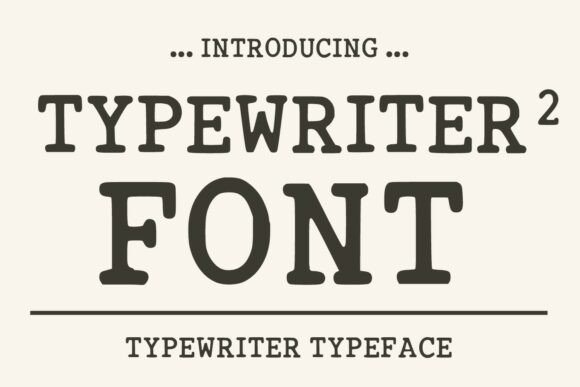
Typewriter2: Authentic Vintage Typography
There is a distinct texture to memory that digital design often struggles to replicate. When we think of old manuscripts, detective novels from the mid-century, or handwritten letters tucked into archival boxes, we aren't just remembering words; we are remembering the mechanical impression of ink on paper. Typewriter2 captures this specific tactile nostalgia without sacrificing the clarity required for modern communication. It is more than a novelty display font; it is a carefully constructed serif typeface that bridges the gap between historical authenticity and contemporary readability.
Unlike many retro fonts that prioritize distress over legibility, Typewriter2 maintains strong character forms. The bold serifs and consistent stroke width ensure that even at smaller sizes, the text remains accessible. This balance is what elevates it from a simple prop to a functional design asset. For designers and business owners, this means you can evoke the warmth of a 1920s office or the raw honesty of a zine without forcing your audience to squint. It brings a handcrafted personality to projects that might otherwise feel sterile in an era of polished, minimalist sans serif dominance.
Where Nostalgia Meets Functional Design
The versatility of Typewriter2 lies in its ability to set a mood instantly while serving practical hierarchy needs. In editorial design, it functions beautifully as a pull-quote font or a chapter header, breaking up dense body copy with visual interest that feels organic rather than decorative. For publishers working on memoirs, historical fiction, or poetry collections, this typeface acts as a subtle narrative device, signaling to the reader that they are entering a space of reflection and storytelling.
In the realm of branding and packaging, the font’s imperfect charm communicates transparency and artisanal quality. Small business owners in the coffee, craft beer, or boutique retail sectors often use Typewriter2 to signal heritage and craftsmanship. A café menu set in this style doesn't just list prices; it suggests that the coffee is roasted with care and the pastries are baked in-house. Similarly, for product labels and rustic packaging concepts, the font provides a premium feel that stands out on crowded shelves against glossy, mass-produced competitors. It tells a story of origin and human touch before the customer even reads the ingredients.
Digital applications benefit equally from this aesthetic. Social media graphics and web headers utilizing Typewriter2 create a scroll-stopping contrast against the sleek interfaces of Instagram or Pinterest. Content creators and bloggers can use it to establish a signature visual identity that feels personal and grounded. However, because it carries such strong vintage associations, it works best when used intentionally. Reserve it for headlines, logos, and short bursts of text where the personality can shine without overwhelming the user experience.
Strategic Pairing and Visual Hierarchy
A common pitfall when working with creative fonts is letting them dominate the entire layout. Typewriter2 has a loud voice, so it requires a supportive partner to maintain professional polish. Effective font pairing is about creating tension and resolution. Because Typewriter2 is a bold serif with significant texture, it pairs exceptionally well with clean, geometric sans serif fonts for body text. A neutral grotesque or humanist sans serif provides the necessary breathing room, allowing the vintage elements to act as accents rather than noise.
Consider the hierarchy of information. If you are designing a poster for a vintage market, Typewriter2 should handle the event name and date—the emotional hooks. The logistical details, such as venue address and ticket pricing, are better served by a highly legible modern typeface. This approach ensures accessibility and prevents cognitive load. In logo design, the font can stand alone for wordmarks due to its distinctive letterforms, but accompanying taglines should typically be set in a contrasting style to avoid visual muddiness.
Designers should also pay attention to spacing. Mechanical typewriters were monospaced by necessity, but digital recreations like Typewriter2 often offer proportional spacing for better flow. Check the OpenType features included in the file. Some versions may include alternate characters, ligatures, or swashes that enhance the handcrafted feel. Utilizing these subtle variations can prevent repetitive letter patterns in all-caps settings, making headlines look more natural and less like a digital stamp.
Evaluating Fit and Licensing for Commercial Use
Before integrating Typewriter2 into a project, take a moment to evaluate whether the tone aligns with the brand's core values. This font speaks to history, authenticity, slowness, and human connection. It is generally ill-suited for tech startups, medical facilities, or financial institutions where precision, speed, and futuristic innovation are the primary messages. Using a nostalgic typeface in those contexts can create a dissonance that confuses the audience. Always test the font in context; mock up a real social media post or print a sample label to see how the ink traps and serifs render at actual size.
Licensing is another critical consideration for entrepreneurs and agencies. While Typewriter2 is widely available, usage rights vary significantly between personal and commercial applications. If you are designing for a client, creating merchandise for sale, or using the font in paid advertising, you must secure the appropriate commercial license. Free downloads found on unverified sites often lack these rights and may pose legal risks. Investing in a legitimate premium font license not only protects your business but often grants access to better technical support and complete character sets, ensuring your design assets remain viable long-term.
Readability testing should always be part of your workflow. What looks charming on a high-resolution monitor may become illegible on a mobile screen or when printed on textured recycled paper. Test Typewriter2 across different backgrounds and lighting conditions. Ensure there is sufficient contrast and that the vintage distress effects do not cause letters to bleed together at small point sizes. Accessibility should never be sacrificed for aesthetics; if the vibe is right but the reading experience is poor, the design has failed its primary function.
Ultimately, Typewriter2 offers a powerful way to inject soul into modern design. It reminds us that behind every message is a person, and behind every brand is a story worth telling with texture and care. Whether you are laying out a book cover, refreshing a boutique identity, or crafting a memorable invitation, this typeface provides the authentic foundation needed to make your work resonate. By respecting its strengths and pairing it thoughtfully, you can leverage the timeless appeal of mechanical typography to create designs that feel both historically rooted and refreshingly relevant.