Bold Stitches: Maximizing the Impact of Chunky Embroidery Typography
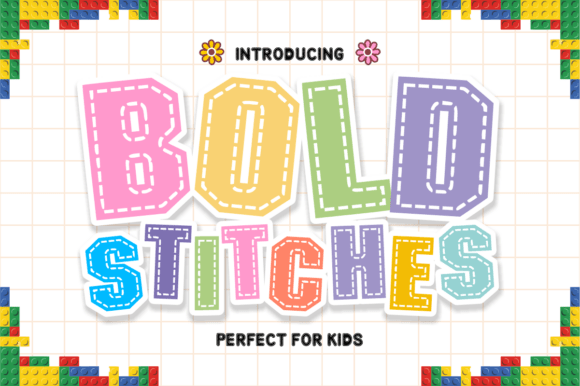
When a design project calls for warmth, nostalgia, or a tangible sense of craftsmanship, standard sans-serif fonts often fall flat. This is where Bold Stitches enters the creative workflow. It is a distinctive display typeface that successfully bridges the gap between digital typography and traditional needlework. Featuring a thick, blocky structure with an internal dashed-line detail, it mimics the appearance of real embroidery without requiring actual thread. For creators aged 20 to 50 ranging from Etsy shop owners to educational content creators, this font offers a shortcut to achieving a handmade aesthetic. However, its unique visual characteristics demand specific handling. Treating Bold Stitches like a standard text font is the most common error designers make, leading to illegible layouts and wasted licensing fees.
Understanding the Visual Weight and Hierarchy
The primary appeal of Bold Stitches lies in its chunky silhouette and charming stitched interior. These elements create immediate visual interest, but they also introduce significant visual weight. A frequent mistake among beginners and intermediate designers is underestimating how much space this typeface occupies. Because the letterforms are constructed to look like padded fabric or thick yarn, they carry more optical mass than a standard bold font of the same point size.
If you attempt to use Bold Stitches for body copy or lengthy captions, the result will be visually exhausting. The internal stitching detail, which looks delightful at headline sizes, turns into visual noise when scaled down. Readers will struggle to distinguish letters, and the playful vibe will quickly become cluttered. To avoid this, reserve this typeface strictly for display purposes. It excels as a hero header, a logo lockup, or a short call-to-action. Pair it with a clean, simple sans-serif or a legible serif for supporting text. This contrast ensures the stitched effect remains a focal point rather than a distraction.
Evaluating Legibility Across Different Media
Versatility is a key selling point for this font, but "versatile" does not mean "universally applicable." A critical oversight occurs when designers assume the dashed-line detail will reproduce identically across all formats. On a high-resolution retina screen, the stitches look crisp and intentional. However, on low-resolution displays or certain print materials, those internal lines can artifact or bleed.
Before committing to Bold Stitches for a large print run or a responsive web banner, conduct thorough testing. For apparel and fabric printing, verify that the stitching detail is thick enough to survive the printing process. If the dashes are too fine for your chosen DTG (Direct-to-Garment) printer or screen mesh count, they may disappear entirely or look like registration errors. In these cases, you might need to manually adjust the stroke width in vector software or opt for a solid version if available. For digital use, always test at the smallest intended viewport size. If the stitches merge into a solid blob on mobile devices, increase the base font size or switch to a simpler alternative for small screens.
Avoiding Thematic Mismatches and Tone Deafness
Typography communicates emotion before the viewer reads a single word. Bold Stitches inherently signals playfulness, DIY culture, childhood, and domestic craft. A significant strategic error involves applying this font to contexts that require authority, luxury, or corporate seriousness. Using a stitched display font for a law firm’s landing page, a medical disclaimer, or a high-end financial report creates cognitive dissonance. The audience may perceive the brand as unprofessional or juvenile, regardless of the actual content quality.
Conversely, this font is an ideal choice for niches that benefit from approachability. Consider these appropriate applications:
- Educational Materials: Worksheets, classroom decor, and homeschooling resources where a friendly tone encourages engagement.
- Handmade Businesses: Packaging, thank-you cards, and social media graphics for artisans selling physical goods.
- Lifestyle Blogging: Recipe headers, craft tutorials, and parenting content where authenticity matters.
- Youth Sports and Events: Team jerseys, fundraiser flyers, and camp signage that need energy and spirit.
If your project falls outside these categories, pause and reconsider. The goal is alignment between visual style and message intent. When in doubt, mock up the design and ask someone outside your immediate circle what emotion the typography evokes. If they say "cute" when you need "trustworthy," Bold Stitches is likely the wrong tool.
Navigating Licensing and Commercial Use
For entrepreneurs and freelancers, understanding font licensing is non-negotiable. A costly misunderstanding involves assuming that purchasing a personal license covers commercial projects. Bold Stitches is popular in the maker community, where many users start with personal licenses for hobby projects and later transition to selling products. If you plan to use this font on merchandise for sale, client deliverables, or monetized digital content, you must secure the appropriate commercial license.
Failing to do so exposes your business to legal risk and undermines the value of type designers' work. Always read the End User License Agreement (EULA) before downloading. Check specifically for restrictions on webfont usage, app embedding, and merchandise limits. Some licenses cap the number of units sold or require tiered pricing based on revenue. Budgeting for the correct license upfront prevents cease-and-desist headaches later. Additionally, verify whether the license allows for modification. If you need to alter the stitch pattern or combine letters into a custom ligature for a logo, ensure your license permits derivative works.
Technical Refinements for Professional Results
Even with the right context and license, poor execution can diminish the font's impact. Display fonts with decorative interiors often have unique spacing requirements. Relying solely on default kerning and tracking can lead to awkward gaps or collisions, especially since the stitched texture extends close to the glyph boundaries. Take time to manually adjust spacing. You may need slightly looser tracking than usual to prevent the internal details from visually merging between adjacent characters.
Color selection also requires careful consideration. While black or dark navy provides maximum contrast, softer palettes often enhance the craft aesthetic. However, avoid low-contrast combinations like white stitches on a pale yellow background. The dashed lines rely on clear definition; without sufficient tonal difference, the embroidery illusion breaks. Test color combinations in grayscale to ensure adequate contrast ratios for accessibility and readability.
Finally, consider the surrounding negative space. Bold Stitches demands room to breathe. Crowding it against edges, images, or other graphic elements suffocates its charm. Treat the typeface as an illustration in its own right. Allow generous margins and padding to let the stitched texture stand out clearly. When designers respect the font's structural needs and thematic boundaries, Bold Stitches transforms from a novelty into a powerful asset for authentic, engaging communication.