Noglia: Strategic Typography for Food Branding and Visual Identity
Selecting the right typeface for a food-related business is rarely just an aesthetic choice; it is a fundamental component of brand positioning and customer communication. Noglia serves as a specialized tool in this decision-making process, offering a distinct visual language that bridges the gap between retro nostalgia and modern appetizing appeal. For entrepreneurs, marketers, and designers working within the culinary space, understanding the strategic utility of Noglia goes beyond its bold, rounded shapes. It requires analyzing how its specific characteristics influence consumer perception, enhance readability in high-traffic environments, and contribute to a cohesive brand identity across physical and digital touchpoints.
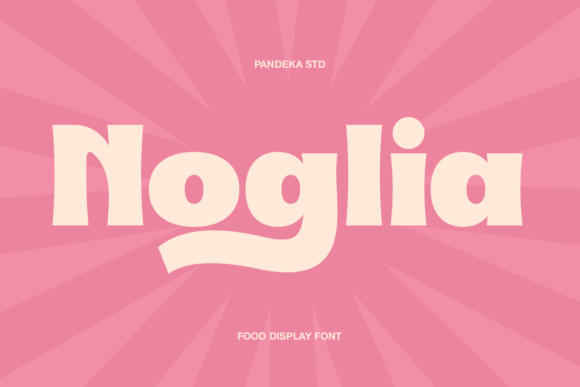
Noglia is defined by its playful yet structured personality. Unlike generic display fonts that may sacrifice legibility for style, Noglia maintains excellent readability while delivering a warm, inviting impression. This balance is critical for businesses where clarity is as important as charm. When planning a menu, packaging line, or social media campaign, the font acts as a non-verbal cue that signals freshness, friendliness, and quality. Its soft curves and delicious retro-inspired aesthetic are not merely decorative; they are psychological triggers associated with comfort and satisfaction. By leveraging these inherent traits intentionally, brands can create more effective communication strategies that resonate with target audiences on a subconscious level.
Aligning Typography with Business Goals and Customer Experience
The primary strategic value of Noglia lies in its ability to support specific business outcomes related to customer experience and brand recall. In the competitive food and beverage sector, differentiation is often achieved through sensory details. Typography is one of the few sensory elements that can be controlled entirely through design decisions. When a bakery or café chooses Noglia, they are making a deliberate statement about their market position. They are signaling accessibility and warmth rather than exclusivity or stark minimalism. This alignment helps filter the audience effectively, attracting customers who value the atmosphere and product style that the typography represents.
Consider the operational aspect of menu design. A menu must function as a sales tool, guiding customers toward high-margin items or signature dishes without causing cognitive friction. Noglia’s bold weight allows headlines and category markers to stand out immediately, creating a clear visual hierarchy. However, because the letterforms are rounded and soft, they do not feel aggressive or demanding. This subtle psychological effect can make the browsing experience more enjoyable, potentially increasing dwell time and order value. For restaurant owners and managers, testing Noglia against existing typography in A/B formats on digital menus or promotional flyers can provide tangible data on its impact on conversion rates and customer engagement.
Enhancing Packaging and Merchandise Visibility
Packaging serves as a silent salesman on crowded retail shelves. For snack brands, artisanal food producers, and beverage companies, the legibility of the brand name at a distance is paramount. Noglia’s thick strokes and generous spacing ensure that product names remain identifiable even when scaled down or viewed from several feet away. This functional benefit supports distribution and retail goals by reducing the risk of products being overlooked due to poor typographic contrast. Furthermore, the font’s retro personality taps into current market trends favoring authenticity and heritage, which can justify premium pricing strategies for craft goods.
When extending branding to merchandise such as tote bags, t-shirts, or reusable cups, versatility becomes a key performance indicator. A typeface that looks good on a screen but fails on fabric is a wasted investment. Noglia’s solid construction translates well to various printing techniques, including screen printing, embroidery, and embossing. Its friendly appearance encourages customers to wear or use branded items as lifestyle accessories, effectively turning them into brand ambassadors. Decision-makers should evaluate Noglia not just for immediate packaging needs but for its long-term viability across a growing ecosystem of branded touchpoints.
Leveraging Stylistic Alternates for Customized Communication
One of Noglia’s most valuable features for strategic designers is the inclusion of three stylistic alternates alongside the regular style. In professional typography, alternates are not novelty additions; they are essential tools for solving layout problems and preventing visual monotony. Relying solely on a single font weight can lead to repetitive designs that fatigue the viewer over time. The availability of alternates allows creators to introduce variation while maintaining strict brand consistency. This flexibility is particularly useful for businesses with extensive product lines or frequent content calendars.
- Solving Layout Constraints: Use alternates to adjust the width or shape of specific letters when fitting text into tight spaces on labels or social media graphics without compromising kerning or legibility.
- Creating Visual Hierarchy: Differentiate between primary headlines and secondary subheads within the same font family by switching styles, reducing the need to introduce conflicting typefaces.
- Emphasizing Key Messages: Draw attention to specific words like "New," "Sale," or "Organic" by using a unique alternate form, acting as a visual anchor that guides the reader’s eye.
- Maintaining Freshness: Rotate stylistic choices across seasonal campaigns to keep the brand identity dynamic and engaging without undergoing a full rebrand.
For freelancers and agency professionals, utilizing these alternates demonstrates a higher level of craftsmanship and attention to detail. It shows clients that the design system has been built with longevity and adaptability in mind. Rather than treating Noglia as a static asset, approach it as a modular system. Plan your typography guidelines to specify exactly when and how each alternate should be used. This documentation ensures that future designers or marketing team members can maintain the intended visual tone, protecting the brand equity you have worked to build.
Risk Assessment and Contextual Decision Making
While Noglia is a powerful asset for food-related projects, applying it without clear context carries risks. No typeface is universally appropriate, and misalignment between typography and brand values can confuse consumers or dilute messaging. Before committing to Noglia, conduct a thorough audit of your brand’s core attributes. If your positioning relies on luxury, exclusivity, clinical precision, or corporate seriousness, Noglia’s playful and rounded nature may undermine your credibility. It is designed specifically for warmth and appetite; using it in a financial services ad or a high-end jewelry campaign would likely result in mixed signals and reduced trust.
Another consideration is pairing and hierarchy. Because Noglia is a display font with significant personality, it demands a supportive partner for body copy. Pairing it with another highly stylized font can create visual chaos and reduce readability. Strategic planning involves selecting neutral, highly legible sans-serif or serif typefaces for longer text blocks to allow Noglia to shine in headline roles without overwhelming the composition. Test these pairings across all intended mediums before finalizing brand guidelines. What works on a large poster may fail on a mobile app interface if the contrast and scale are not calibrated correctly.
Avoiding Trend Dependency in Long-Term Planning
Retro-inspired aesthetics cycle through popularity, and while Noglia’s design is grounded enough to avoid feeling like a fleeting fad, reliance on trendiness alone is a fragile strategy. To mitigate this risk, focus on the timeless aspects of the font: its geometry, proportion, and readability. Build your brand identity around these structural qualities rather than just the "vibe." When the retro trend eventually evolves, a brand built on solid typographic foundations will age better than one built solely on nostalgia. Regularly review your typography usage against business metrics. If engagement drops or customer feedback suggests the branding feels dated, be prepared to adjust the application of Noglia or supplement it with new assets.
Furthermore, consider the licensing and legal implications of font usage in commercial projects. Ensure that your acquisition of Noglia covers all intended use cases, including web embedding, app usage, and merchandise production if applicable. Overlooking licensing details can lead to operational disruptions or legal complications down the line. Treat font procurement with the same diligence as software or equipment purchasing. Proper asset management is part of professional practice and protects the business from unnecessary liability.
Practical Implementation for Maximum Impact
To derive the most value from Noglia, integrate it into a broader creative workflow rather than treating it as an isolated element. Start by defining the emotional response you want to elicit from your audience. Is it hunger? Comfort? Excitement? Trust? Map Noglia’s specific features to these desired outcomes. For example, if the goal is to emphasize homemade quality, utilize the softer alternates and looser tracking to mimic hand-lettered signage. If the goal is modern efficiency and speed, stick to the regular style with tighter spacing and high-contrast color backgrounds. Intentionality transforms a font file into a communication strategy.
Educators and content creators teaching design or marketing can use Noglia as a case study in semantic typography. Analyze how its rounded forms differ psychologically from sharp, angular alternatives. Discuss the relationship between shape and taste perception, referencing cross-modal correspondence research. This deepens understanding beyond surface-level aesthetics and equips students or teams with the critical thinking skills necessary to make informed design decisions. Whether you are a solo freelancer crafting a logo for a local café or a marketing director overseeing a national snack campaign, the principles remain the same: understand the tool, respect the context, and measure the results.
Ultimately, Noglia offers a blend of character and utility that is difficult to find in generic type libraries. Its strength is not just in looking good, but in performing well within the specific constraints of the food and hospitality industry. By approaching its selection and implementation with strategic foresight, businesses can create visual identities that are not only memorable and appetizing but also resilient and effective. The difference between a mediocre design and a successful brand often lies in these nuanced typographic choices. Make them count by prioritizing purpose over preference and ensuring every curve and stroke serves a defined business objective.