Evaluating Teacher Outline Font for Educational and Creative Projects
Selecting the appropriate typography is a critical step in designing effective educational materials and creative merchandise. For educators, designers, and crafters, the choice of font influences not only aesthetic appeal but also functionality and engagement. Teacher Outline is a minimalist hollow display font specifically engineered to bridge the gap between professional clarity and interactive design. Understanding the specific utility, benefits, and limitations of this typeface allows users to determine if it aligns with their current project requirements or if an alternative solution is necessary.
Defining the Typography and Visual Characteristics
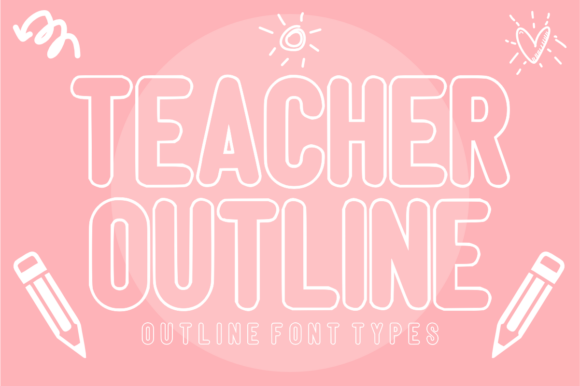
Teacher Outline is categorized as a display font with a distinct hollow or inline structure. Unlike standard solid typefaces, the interior of each letterform is negative space, defined solely by bold, clean outer strokes. This architectural choice creates a modern, airy appearance that maintains legibility even at larger sizes. The design prioritizes a balance between weight and whitespace, ensuring that the letters remain distinct against various backgrounds without appearing visually heavy.
The minimalist nature of the font removes unnecessary ornamentation, focusing instead on geometric consistency. This makes it particularly suitable for contemporary design trends that favor clean lines and uncluttered layouts. Because the font relies on its outline structure for definition, it inherently invites modification. Users can fill the hollow spaces with patterns, colors, or textures, transforming the typography from a static element into a dynamic component of the overall design. This duality—functioning as both readable text and a decorative canvas—is the primary differentiator of Teacher Outline compared to traditional serif or sans-serif fonts.
Primary Applications and Functional Benefits
The evaluation of Teacher Outline should center on its intended use cases. Its unique construction offers specific advantages in educational and crafting environments where interaction and customization are paramount.
Interactive Educational Materials
In classroom settings, engagement is often linked to tactile participation. The hollow structure of Teacher Outline makes it an ideal candidate for coloring pages and activity sheets. Students can color within the letters, reinforcing letter recognition and fine motor skills simultaneously. For educators creating custom worksheets, this font transforms standard headers into interactive elements. It supports differentiated instruction by allowing students to personalize their learning materials, which can increase ownership and interest in the content.
Crafting and Digital Fabrication
For users operating Cricut, Silhouette, or other cutting machines, outline fonts present distinct technical considerations. Teacher Outline is designed with clean vector paths that facilitate smooth cutting and weeding. The bold stroke width provides structural integrity when applied to vinyl, cardstock, or fabric, reducing the risk of tearing during the transfer process. This makes it a practical choice for teacher apparel, tote bags, and decals where durability is required alongside style. Additionally, the hollow design reduces material usage compared to solid block letters, which can be a cost-saving factor in large-scale production.
Sublimation and Layered Design
The font’s transparency allows for advanced layering techniques in sublimation and digital design. Designers can place textured backgrounds, gradients, or thematic imagery behind the text, allowing the visual to show through the letterforms. This capability is particularly valuable for creating complex-looking designs with minimal effort. For mug sublimation or planner covers, this layering adds depth and visual interest that solid fonts cannot achieve without extensive post-processing.
Tradeoffs and Practical Considerations
While Teacher Outline offers significant versatility, it is not a universal solution. A balanced evaluation requires acknowledging scenarios where this typeface may underperform or introduce friction.
Legibility at Small Sizes
Outline fonts generally suffer from reduced legibility when scaled down. The negative space that defines the character shape can disappear at small point sizes, causing letters to blur or become indistinguishable. Teacher Outline is best reserved for headlines, titles, and prominent labels. For body copy, footnotes, or dense informational text, a solid, high-x-height sans-serif font remains the superior choice for readability and accessibility.
Weeding Complexity in Physical Crafts
Although the bold strokes aid in cutting, the hollow nature means there are two cut lines per letter (inner and outer). In intricate scripts or smaller applications, this doubles the weeding effort compared to a solid font. Crafters working on detailed projects or tight deadlines should test the font at their intended size before committing to a full production run. If the project requires minute text on vinyl, a solid bold font may offer a more efficient workflow.
Accessibility Compliance
When designing digital resources or printed materials for public distribution, accessibility standards must be considered. Hollow fonts can sometimes pose challenges for screen readers or individuals with visual processing disorders, depending on how the text is rendered and contrasted. While excellent for decorative purposes, Teacher Outline should not replace accessible typography for essential instructional content. Ensuring sufficient contrast between the outline stroke and the background is mandatory to maintain compliance with WCAG guidelines in digital formats.
Decision-Making Framework: When to Choose Teacher Outline
Determining whether Teacher Outline is the right asset involves assessing specific project parameters against the font's characteristics.
- Choose Teacher Outline if: The project involves student interaction (coloring/filling), requires a layered aesthetic, serves as a primary headline or title, or involves vinyl cutting at medium-to-large scales. It is also highly effective for merchandise where a modern, playful, yet professional teacher identity is desired.
- Consider Alternatives if: The text is intended for extended reading, the physical application size is below one inch, strict accessibility compliance is the primary driver, or the design requires a traditional, authoritative academic tone rather than a creative one.
Users should also evaluate licensing and technical compatibility. Ensure the font file formats (OTF, TTF, SVG) are compatible with your specific software ecosystem, whether that be Adobe Illustrator, Canva, or cutting machine software. Verifying commercial licensing terms is equally important for those selling finished goods like apparel or digital templates.
Integrating Into a Broader Design System
Teacher Outline functions most effectively when paired with complementary typefaces. Because it carries significant visual weight and personality, it should act as the accent rather than the foundation of a typographic hierarchy. Pairing it with a simple, neutral sans-serif for supporting text creates a cohesive look that guides the viewer’s eye without causing cognitive overload.
Ultimately, the value of Teacher Outline lies in its specialized utility. It solves specific problems related to interactivity and layered design that standard fonts cannot address. By understanding its optimal use cases and respecting its limitations regarding scale and accessibility, educators and designers can leverage this tool to create materials that are both visually engaging and functionally sound. The decision to adopt this font should be driven by the specific interactive or aesthetic goals of the project, ensuring it serves as a purposeful enhancement to the user's creative toolkit.